Blog

  • Section 153C Notice: 5 Critical Steps to Protect Your Rights When the Income Tax Department Comes Knocking

    Section 153C Notice: 5 Critical Steps to Protect Your Rights When the Income Tax Department Comes Knocking

    Section 153C Notice : 5 Critical Steps to Protect Your Rights

    You didn’t face a search. You didn’t face a seizure. And yet, one morning, a Section 153C income tax notice lands at your door addressed to you as a third party whose documents were found during a raid on someone else. This is where taxpayers make their most expensive mistake: they either panic and overshare, or they ignore the notice entirely. Both approaches can destroy an otherwise defensible position. Here’s everything you need to know and the 5 critical steps that could make all the difference.


    What Is a Section 153C Notice in Income Tax? Understanding the Search & Seizure Connection

    Section 153C of the Income Tax Act, 1961 is one of the most powerful and misunderstood provisions in Indian taxation. It allows the Income Tax Department to assess a person called a ‘non-searched person’ based on incriminating documents, books of account, or assets belonging to them that were found during a search and seizure operation conducted at another person’s premises under Section 132.

    In plain terms: if you are a business partner, family member, client, or associate of someone whose premises were raided, and the department finds papers or digital records belonging to you during that raid, you can receive a Section 153C search and seizure notice even though no search was ever conducted at your own address.

    The Income Tax Department, as guided by CBDT circulars available on incometax.gov.in, uses this provision to widen the net of a search operation beyond the original searched person. This makes Section 153C notices particularly dangerous because taxpayers often receive them with no context about what was found, where, or by whom.

    Read our detailed guide on Received a Shocking Section 153C Income Tax Notice?


    Section 153C vs Section 153A: Why the Difference Matters for Your Section 153C Notice

    Section 153A applies to the searched person the one whose premises were actually raided. Section 153C applies to a third party someone connected to the searched person. This distinction is not just academic. Under Section 153C, the Assessing Officer of the searched person must first record a satisfaction note establishing that the seized documents ‘belong to’ or ‘pertain to’ the non-searched person, and then transmit those documents and the satisfaction note to the AO having jurisdiction over you. If this satisfaction note is missing, vague, or improperly recorded, your Section 153C notice is legally vulnerable to challenge.


    Critical Legal Point

    The Supreme Court of India and multiple High Courts have consistently held that a Section 153C notice is invalid if:

    • The satisfaction note by the AO of the searched person is absent or defective

    • The documents found cannot be shown to ‘belong to’ the non-searched person

    • The notice is issued beyond the prescribed time limit under Section 153C Source: CBDT guidelines and landmark rulings including CIT vs. Kabul Chawla (Delhi HC)


    Section 153C Time Limit: A Crucial Safeguard That Many Taxpayers Miss

    The income tax notice time limit under Section 153C is strictly prescribed. The AO can issue a Section 153C notice for six assessment years immediately preceding the year of search and, in cases of escaped income of ₹50 lakh or more in any year, up to ten assessment years preceding the year of search can be covered.

    If a Section 153C notice is issued for years beyond this window, it is barred by limitation and legally challengeable. Always check the date of search and the assessment years covered in your notice. This simple check has helped many taxpayers avoid unnecessary compliance entirely.


    5 Critical Steps to Protect Your Rights When You Receive a Section 153C Notice

    1: Do Not Panic : But Act Immediately The moment you receive a Section 153C income tax notice, acknowledge its receipt and note the response deadline. Never ignore it non-response can lead to ex-parte assessment and severe adverse orders. Your response window is typically 30 days, but this can vary.

    2: Examine the Notice for Procedural Validity Check: (a) Is a satisfaction note recorded by the searched person’s AO? (b) Does the notice specify what documents were found and how they ‘belong to’ you? (c) Is the notice within the Section 153C time limit? Any defect here is a ground for legal challenge before you even address the merits.

    3: Gather and Organise Your Financial Records: Compile all books of account, bank statements, ITRs, agreements, and correspondence for the years under scrutiny. Cross-check what the department may have found against what was legitimately disclosed. Unexplained gaps are far more dangerous than disclosed income.

    4: File a Detailed, Calibrated Written Reply :Your reply to the Section 153C notice must be factual, legally precise, and free of unnecessary admissions. Address each document or asset the notice references. Raise preliminary objections on jurisdiction and limitation first, then respond on merits — in the same reply if the deadline doesn’t allow separate submissions.

    Step 5: Engage a Qualified Tax Professional Immediately: Section 153C proceedings involve complex interplay of search and seizure law, assessment procedure, and evidentiary standards. As tax professionals associated with Adwani & Co LLP led by Dr. Haresh Adwani have noted in practice, the difference between a well-prepared Section 153C reply and a reactive one can run into crores of rupees in tax demand. Do not navigate this alone.


    Key Takeaway

    Section 153C notice can reach you even if your own premises were never searched

    A missing or defective satisfaction note by the searched person’s AO = legally invalid notice

    Always verify the Section 153C time limit notices beyond 6/10 assessment years are barred

    Section 153C is distinct from Section 153A your rights as a non-searched person differ significantly

    A precise, legally grounded reply is non-negotiable never reply without professional guidance Government reference: Income Tax Department guidelines at incometax.gov.in and CBDT search & seizure circulars

    Frequently Asked Questions

    Q1. What is a Section 153C notice and who can receive it?

    A Section 153C notice is issued to a non-searched person whose documents or assets are found during a search at someone else’s premises. You can receive it even if no raid was conducted at your own address.

    Q2. Can I challenge a Section 153C notice on procedural grounds?

    Yes. If the satisfaction note is absent or defective, or if the notice covers years beyond the Section 153C time limit, you can raise legal objections. Courts have quashed Section 153C notices on these grounds.

    Q3. How many years can be covered under a Section 153C income tax search notice?

    Typically 6 assessment years preceding the year of search. In cases of escaped income of ₹50 lakh or more, this can extend to 10 assessment years.

    Q4. What documents should I collect after receiving a Section 153C notice?

    Collect ITRs, bank statements, books of account, contracts, and any financial records for the relevant assessment years. Cross-reference them against what the department may have seized.

    Q5. Is Section 153C the same as a scrutiny notice under Section 143(2)?

    No. Section 153C arises specifically from search and seizure proceedings under Section 132 and involves much higher legal stakes. A Section 153C reply requires specialised legal and tax expertise — it is far more complex than a routine scrutiny notice

    Conclusion:

    Receiving a Section 153C income tax notice is not the end of the world but it requires an informed, strategic response from day one. Verify the notice’s procedural validity, check the Section 153C time limit, organise your financial records, and file a calibrated reply that addresses legal objections first and merits second. The Income Tax Department’s search and seizure machinery is powerful, but it operates within legal boundaries boundaries that protect you if you know how to invoke them.

    The worst thing you can do after receiving a Section 153C notice is to respond in panic, overshare information, or go silent. The second-worst thing is to face it without experienced guidance.

    Author

    CA. Dipesh Gurubakshani. He is a Chartered Accountant with professional experience in audit, direct taxation, and accounting advisory services.

    Whether you have already received a credit card income tax notice or want to ensure you never do Adwani and Company is your trusted partner. Led by Dr. Haresh Adwani and a seasoned team of Chartered Accountants, Adwani and Company provides end-to-end income tax compliance, notice response, and financial planning services.

    Get Expert Tax Guidance

    If you want to file your ITR accurately and defend it confidently visit ITRAdvisor.in today.

    From ITR form selection and tax regime comparison to notice response and professional review, ITRAdvisor.in gives you the tax knowledge you need to stay compliant and avoid costly mistakes.

    Read our ITR Filing Guide for AY 2026-27

    Explore the Old vs New Tax Regime Comparison 2026

    → Understand Income Tax Notices and How to Respond Visit: ITRAdvisor.in

    Disclaimer

    ITRAdvisor.in is an educational and informational platform focused on tax awareness and compliance updates. Nothing contained herein should be construed as solicitation or advertisement of professional services. Professional services, where applicable, are rendered in accordance with ICAI guidelines. This article is published on ITRAdvisor.in, a tax and compliance knowledge platform.

    The content has been reviewed for technical accuracy by professionals associated with Adwani & Co LLP.

    © 2026 ITRAdvisor.in. All rights reserved.

  • Share Trading Tax in 2026: Is It Business Income or Capital Gains? Here’s the Definitive Answer Every Indian Investor Needs

    Share Trading Tax in 2026: Is It Business Income or Capital Gains? Here’s the Definitive Answer Every Indian Investor Needs

    23 June 2026•Dr. Haresh Adwani

    Share Trading Tax Income or Capital Gains

    Every year, tens of thousands of Indian investors file their income tax return with one genuinely confusing question hovering over them: are my share market profits taxable as capital gains or as business income? Get it right, and you pay the correct tax at the correct rate in the correct ITR form. Get it wrong, and you’re looking at a defective return notice, a tax demand with interest, or worse a scrutiny assessment from the Income Tax Department’s AI-driven risk engine that flags the mismatch between your broker’s SFT (Statement of Financial Transactions) data and what you declared. This is not an academic question. In AY 2026-27, with CBDT’s near-real-time data integration with NSE and BSE, the classification of share trading income has become one of the most consequential decisions in personal income tax compliance.


    Why Share Trading Tax Classification Matters More Than Ever in 2026

    The Income Tax Act, 1961 does not explicitly define when a person is a ‘trader’ versus an ‘investor’ in shares. This deliberate ambiguity has led to decades of litigation and some very clear CBDT guidance through circulars and court-tested principles that every taxpayer dealing in shares must understand.

    The classification directly determines three things: the applicable tax rate, the ITR form you must file, and whether losses can be set off against other income. Filing in the wrong category is not a minor clerical error it is a substantive tax position that can unravel entirely during a scrutiny assessment.


    The Core Rule: 4 Types of Share Trading Activity, 4 Different Tax Treatments

    Indian income tax law recognises four distinct share trading scenarios, each with a different tax classification, applicable rate, and filing requirement. Understanding which bucket your activity falls into is the foundational step in share trading tax compliance for AY 2026-27.

    1. Delivery-Based Investing: Capital Gains (LTCG / STCG)

    If you buy shares, take delivery to your demat account, and sell them later this is investing, not trading. The gains are taxed as capital gains. The holding period determines the rate:

    • Short-Term Capital Gains (STCG) : held for 12 months or less: taxed at 20% (revised post-Budget 2024, up from 15%) under Section 111A
    • Long-Term Capital Gains (LTCG) : held for more than 12 months: taxed at 12.5% on gains above ₹1.25 lakh (Budget 2024 raised the exemption from ₹1 lakh) under Section 112A

    LTCG and STCG from listed equity shares go into Schedule CG of ITR-2 or ITR-3. Importantly, LTCG from shares does not benefit from indexation a position the Finance Act 2024 confirmed explicitly.

    2. Intraday Equity Trading: Speculative Business Income

    If you buy and sell shares on the same day without taking delivery commonly known as MIS (Margin Intraday Square-off) orders this is classified as speculative business income under Section 43(5) of the Income Tax Act. This is a critical distinction that many retail traders miss entirely.

    Speculative business losses can only be set off against speculative business income not against salary, rental income, or even F&O profits. They can be carried forward for four years (not eight), and only against future speculative income. You must file ITR-3 for intraday trading income. ITR-1 or ITR-2 are not valid.

    3.F&O Trading: Non-Speculative Business Income

    Futures and Options (F&O) trading is explicitly excluded from the definition of speculative transactions under Section 43(5)(d). F&O profits and losses are treated as non-speculative business income which means they can be set off against any other head of income except salary in the same year, and carried forward for eight years against any business income.

    The F&O turnover calculation (premium received on options sold + absolute value of profit/loss on futures) determines whether a tax audit under Section 44AB is required. For FY 2025-26 (AY 2026-27), the threshold is ₹10 crore for digital transactions. This is an area where many active options traders unknowingly cross the audit threshold without realising it.


    Share Trading Tax Income or Capital Gains

    Every year, tens of thousands of Indian investors file their income tax return with one genuinely confusing question hovering over them: are my share market profits taxable as capital gains or as business income? Get it right, and you pay the correct tax at the correct rate in the correct ITR form. Get it wrong, and you’re looking at a defective return notice, a tax demand with interest, or worse — a scrutiny assessment from the Income Tax Department’s AI-driven risk engine that flags the mismatch between your broker’s SFT (Statement of Financial Transactions) data and what you declared. This is not an academic question. In AY 2026-27, with CBDT’s near-real-time data integration with NSE and BSE, the classification of share trading income has become one of the most consequential decisions in personal income tax compliance.


    Why Share Trading Tax Classification Matters More Than Ever in 2026

    The Income Tax Act, 1961 does not explicitly define when a person is a ‘trader’ versus an ‘investor’ in shares. This deliberate ambiguity has led to decades of litigation and some very clear CBDT guidance through circulars and court-tested principles that every taxpayer dealing in shares must understand.

    The classification directly determines three things: the applicable tax rate, the ITR form you must file, and whether losses can be set off against other income. Filing in the wrong category is not a minor clerical error it is a substantive tax position that can unravel entirely during a scrutiny assessment.

    Critical Warning for Active Traders:

    If your F&O turnover exceeds ₹10 crore (or ₹2 crore if opting out of 44AD), a tax audit by a Chartered Accountant under Section 44AB is mandatory. Filing ITR-3 without the audit report (Form 3CA/3CB + 3CD) in such cases is a non-compliant return.

    4. High-Frequency Delivery Trading: The Grey Zone

    This is where things get genuinely complicated. If you are buying and selling shares in delivery mode but with very high frequency multiple trades a day, short holding periods, large volumes the Income Tax Department may reclassify your activity from capital gains to business income, even though you technically took delivery.

    CBDT Circular No. 6/2016 provides the framework for this classification, and the courts have consistently held that frequency of transactions, intention at the time of purchase, volume of trading, and ratio of trading profits to dividend income are all relevant factors. If CBDT‘s data from your broker’s SFT filing shows 500+ delivery trades in a year, you can expect scrutiny on whether capital gains treatment is appropriate.


    Share Trading Tax Classification: Quick Reference Table for AY 2026-27

    Trading ActivityTax ClassificationTax Rate (AY 2026-27)ITR FormSchedule
    Delivery-based equity shares (held ≤12 months)STCG Capital Gains20% flat (post-Budget 2024)ITR-2 / ITR-3Schedule CG
    Delivery-based equity shares (held >12 months)LTCG Capital Gains12.5% (above ₹1.25L exempt)ITR-2 / ITR-3Schedule CG
    Intraday equity trading (MIS orders)Speculative Business IncomeSlab rate; set-off only vs spec. incomeITR-3 mandatorySchedule BP
    F&O trading (futures & options)Non-Speculative Business IncomeSlab rate; audit if turnover >₹10CrITR-3 mandatorySchedule BP
    Equity mutual funds (held ≤12 months)STCG — Capital Gains20% flatITR-2 / ITR-3Schedule CG
    Equity mutual funds (held >12 months)LTCG — Capital Gains12.5% (above ₹1.25L)ITR-2 / ITR-3Schedule CG

    Which ITR Form Is Correct for Share Trading Income in 2026?

    ITR form selection is the single most common error in share trading tax filing. Here is the definitive guide:

    • ITR-1 (Sahaj): Not valid for any share trading income capital gains or business. If you have any share market activity, ITR-1 is the wrong form.
    • ITR-2: Valid for investors with only capital gains (delivery-based LTCG/STCG). Not valid if you have any intraday or F&O income.
    • ITR-3: Mandatory for intraday traders, F&O traders, and investors who also trade. This is the most comprehensive form and handles all four categories above.
    • ITR-4 (Sugam): Not valid for capital gains income. Only appropriate for those opting for presumptive taxation under 44AD/44ADA and F&O trading cannot be reported under presumptive taxation.

    Read our detailed guide on ITR-1 vs ITR-2 vs ITR-4: Which Form to Fill Based on Your Income Type 2026 to avoid the most common ITR form selection mistakes.


    The Expert Angle: How CBDT and Courts Determine Your Trading Classification

    According to Dr. Haresh Adwani, PhD in Commerce and law graduate at Adwani & Co LLP, the question of whether share trading income is business income or capital gains is ultimately a question of fact and the burden of proof lies entirely with the taxpayer. The Income Tax Department does not need to prove that you are a trader; you need to demonstrate that you are an investor.

    The key factors that courts and assessing officers examine:

    • Intention: Was the purchase made with the intent to hold or to sell quickly for profit?
    • Frequency: High-frequency trades over a short period strongly suggest business activity
    • Funding: Were shares bought with borrowed funds? Borrowing to invest in shares is a business indicator
    • Head of income in prior years: If you have been reporting the same shares as capital gains for years and then switch to business income (or vice versa), the assessing officer will examine the consistency
    • Magnitude of activity vs. other income: If share profits are your dominant income source, business income classification becomes harder to resist

    CBDT’s 2016 circular permits taxpayers to choose either capital gains or business income classification for their listed equity portfolio but only once. Having made the choice, you must be consistent year after year. Switching classifications opportunistically to minimise tax in different years is a recognised red flag in faceless scrutiny assessments.

    For authoritative reference, the Income Tax Department’s guidance on capital gains is available at incometax.gov.in, including the Schedule CG instructions in the ITR filing utility.


    Share Trading Losses in 2026: Set-Off & Carry Forward Rules That Can Save You Tax

    Losses from share trading are one of the most under-utilised tax assets in India. Here is how the set-off hierarchy works:

    • STCG loss from shares: Can be set off against any other capital gain (LTCG or STCG from any asset). Cannot be set off against salary or business income. Carry forward: 8 years.
    • LTCG loss from shares: Can only be set off against LTCG. Carry forward: 8 years under the new post-Budget 2024 rules. Note: LTCG losses now arise given the 12.5% tax on gains above ₹1.25 lakh a new planning opportunity.
    • Intraday (Speculative) loss: Set off only against speculative business income. Carry forward: 4 years only.
    • F&O (Non-Speculative Business) loss: Set off against any business income or income from other heads (except salary). Carry forward: 8 years against business income. This is the most valuable loss in a trader’s hands — and is the core reason why F&O loss tax benefit planning is now a standard year-end exercise for active market participants.

    Crucial Deadline Alert: To carry forward any trading loss (capital or business), you must file your ITR on or before the due date — July 31, 2026 for individuals without audit, October 31, 2026 for those requiring audit. A late-filed return forfeits the carry-forward benefit entirely for capital loss (though business loss carry-forward under Sec 72 may still be allowed if the return is filed under 139(1)

    Key Takeaways

    ✅ Delivery-based share investing = Capital Gains (LTCG at 12.5% / STCG at 20%). File ITR-2 or ITR-3.
    ✅ Intraday equity trading = Speculative Business Income. File ITR-3 only. Losses carry forward 4 years — speculative only.
    ✅ F&O trading = Non-Speculative Business Income. File ITR-3. Losses carry forward 8 years — broadest set-off rights.
    ✅ High-frequency delivery traders risk reclassification to business income by CBDT — consistency of classification matters.
    ✅ ITR-1, ITR-4 are not valid for any taxpayer with share market income or losses.
    ✅ LTCG exemption threshold is now ₹1.25 lakh (Budget 2024). Tax rate is 12.5% — no indexation.
    ✅ To carry forward losses, file ITR on or before the due date — late filing forfeits this benefit.

    Frequently Asked Questions (FAQs)

    Q1. Is share trading income taxable as business income or capital gains in India 2026?

    It depends on the type of trading. Delivery-based investing is capital gains (LTCG/STCG). Intraday equity is speculative business income, and F&O trading is non-speculative business income — each with different tax rates and ITR forms.

    Q2. What is the LTCG tax rate on shares and equity mutual funds for AY 2026-27?

    LTCG on listed equity shares and equity mutual funds is taxed at 12.5% on gains exceeding ₹1.25 lakh per financial year, with no indexation benefit, under Section 112A as amended by Budget 2024.

    Q3. Which ITR form should I file for intraday and F&O trading income?

    ITR-3 is mandatory for both intraday (speculative) and F&O (non-speculative) trading income. Filing ITR-1 or ITR-2 when you have such income makes your return defective under Section 139(9).

    Q4. Can F&O losses be set off against salary income?

    No. F&O losses (non-speculative business loss) cannot be set off against salary income in the same year. They can be set off against other business income or income from house property, and carried forward for 8 years.

    Q5. Can I choose to treat my share trading profits as capital gains instead of business income?

    CBDT’s 2016 circular permits taxpayers with listed equity investments to choose capital gains treatment, provided you are consistent year after year. Switching classifications annually is a red flag during scrutiny assessments.

    Conclusion:

    The question of whether your share trading activity qualifies as business income or capital gains is not something to resolve by Googling at the last minute before the ITR filing deadline. It is a tax position that must be decided at the beginning of the financial year, maintained consistently, and supported by your actual trading behaviour. With CBDT now receiving real-time SFT data from brokers covering every buy and sell transaction above ₹10 lakh, the margin for error has shrunk to near zero.

    About the Author
    Dr. Haresh Adwani
    Ph.D. in Commerce | Law Graduate | Managing Partner, Adwani & Co LLP Dr. Haresh Adwani holds a Ph.D. in Commerce and is a qualified Law graduate with over two decades of hands-on experience in GST advisory, direct taxation, and statutory compliance for businesses across

    Disclaimer: ITRAdvisor.in is an educational and informational platform focused on tax awareness and compliance updates. Nothing contained herein should be construed as solicitation or advertisement of professional services. Professional services, where applicable, are rendered in accordance with ICAI guidelines. This article is published on ITRAdvisor.in, a tax and compliance knowledge platform. The content has been reviewed for technical accuracy by professionals associated with Adwani & Co LLP. pant, or someone navigating all three simultaneously — your tax treatment, ITR form selection, and loss utilisation strategy need to be correct, consistent, and complete.

    Learn more about our Income Tax Filing Services for Traders & Investors — covering ITR-3 filing, tax audit support under Section 44AB, F&O turnover calculation, and capital gains reconciliation with your broker’s statement.

    Visit ITRAdvisor.in today for professional guidance and consultation.

    Early action can often prevent bigger tax problems later

  • Smart Income Tax Filing for Salaried Individuals: The Ultimate AY 2026-27 Playbook

    Smart Income Tax Filing for Salaried Individuals: The Ultimate AY 2026-27 Playbook

    Income Tax Filing for Salaried Individuals

    Every July, millions of salaried professionals across India suddenly remember the same thing the income tax return deadline is approaching. The result? Rushed filings, missed deductions, wrong form selection, and sometimes a penalty notice a few months later. If that sounds familiar, you are not alone.

    Income tax filing for salaried individuals is not complicated but it does demand the right information, at the right time, applied the right way. For Assessment Year 2026-27 (covering Financial Year 2025-26), the stakes have risen further. The Income Tax Department of India has upgraded its data-matching engine, and any mismatch between what you file and what the system already knows about you through your Annual Information Statement (AIS) or Form 26AS can trigger a scrutiny notice.

    This guide, developed with inputs from Dr. Haresh Adwani a Ph.D. in Commerce, law graduate, and seasoned tax professional associated with Adwani and Company gives you a complete, accurate, and actionable roadmap for ITR filing in AY 2026-27. Whether you are a first-time filer or an experienced salaried employee looking to optimise your tax outgo, you will find everything you need here.


    What is Income Tax Filing for Salaried Individuals?

    Income tax filing for salaried individuals is the annual process of declaring your total earnings for a financial year to the Income Tax Department of India, computing the tax liability, and either paying the balance or claiming a refund for excess tax deducted at source (TDS).

    For AY 2026-27, the applicable financial year is FY 2025-26 from 1 April 2025 to 31 March 2026. As per the Income Tax Department (incometax.gov.in), every individual whose gross income exceeds the basic exemption limit, or from whose income TDS has been deducted, must file an Income Tax Return (ITR).

    Which is correct form for Income Tax Filing for Salaried Individuals

    For most salaried employees, the correct form is ITR-1 (SAHAJ), applicable when:

    • Total income does not exceed ₹50 lakh
    • Income is from salary, one house property, or other sources (like interest)
    • There is no capital gains income
    • No income from business or profession

    Tax Filing for Salaried Individuals in AY 2026-27 is also important beyond legal compliance it builds your financial credibility, supports loan applications, facilitates visa processing, and is essential for claiming any TDS refund.

    Learn more about our ITR Filing Services for Salaried Professionals

    Income Tax Slabs AY 2026-27: New Regime vs Old Regime for Salaried Individuals

    One of the most debated questions in income tax filing for salaried individuals is: which tax regime should I choose? The government made the New Tax Regime the default from FY 2024-25, but salaried employees still retain the freedom to opt for the Old Regime while filing their ITR.

    New Tax Regime AY 2026-27 Slabs

    Income SlabTax Rate
    Up to ₹3,00,000Nil (0%)
    ₹3,00,001 – ₹7,00,0005%
    ₹7,00,001 – ₹10,00,00010%
    ₹10,00,001 – ₹12,00,00015%
    ₹12,00,001 – ₹15,00,00020%
    Above ₹15,00,00030%

    Key benefits under New Regime:

    Rebate under Section 87A means zero tax if income is up to ₹7 lakh. Standard deduction of ₹75,000 is available for salaried employees.

    Old Tax Regime : Key Slabs

    • Up to ₹2,50,000 : Nil
    • ₹2,50,001 to ₹5,00,000 : 5%
    • ₹5,00,001 to ₹10,00,000 : 20%
    • Above ₹10,00,000 : 30%
    • Allows major deductions: Section 80C, 80D, HRA, LTA, home loan interest, NPS, and more

    Expert Insight:

    Dr. Haresh Adwani consistently advises that the optimal regime depends on your total eligible deductions. If your combined deductions under the Old Regime exceed approximately ₹3.75 lakh, it is likely more tax-efficient than the New Regime. A personalised comparison not a generic one is always the smarter starting point.

    Documents Required for Income Tax Filing for Salaried Individuals: AY 2026-27 Checklist

    Preparation is the single most underrated step in income tax filing for salaried individuals. The Income Tax Department strongly advises taxpayers to gather all financial records before logging into the e-filing portal. Here is what you need:

    Primary Documents

    • Form 16: Issued by your employer contains salary breakup, allowances, and TDS details
    • Form 26AS: Tax credit statement showing all TDS, advance tax, and refunds download from incometax.gov.in
    • Annual Information Statement (AIS): Captures a far wider data set including stock transactions, mutual fund investments, and foreign remittances

    Supporting Documents

    • Bank statements for all accounts (savings and FD interest)
    • Investment proof : PPF, ELSS mutual funds, LIC premiums, NPS statements
    • Home loan interest certificate (for Section 24(b) deduction)
    • Rent receipts and landlord PAN (for HRA exemption)
    • Medical insurance premium receipts (for Section 80D)
    • PAN card and Aadhaar (mandatory for filing and e-verification)

    Government Source Note: As per recent Ministry of Finance advisories and updates on the Income Tax portal, the Annual Information Statement (AIS) now cross-references data from banks, depositories, mutual funds, and the GST Portal. Verifying your AIS before filing is no longer optional it is essential.

    How to do Income Tax Filing for Salaried Individuals Online for Salaried Employees

    Step-by-Step (AY 2026-27)

    The Income Tax Department’s e-filing portal (incometax.gov.in) offers a guided ITR filing experience. Here is a clear, step-by-step process for income tax return filing for salaried employees in AY 2026-27:

    1: Log In to the e-Filing Portal

    Visit incometax.gov.in and sign in with your PAN credentials. First-time users must complete a one-time registration. Ensure your mobile number linked to Aadhaar is active for OTP-based e-verification later.

    2: Select the Correct ITR Form

    For most salaried individuals with income below ₹50 lakh and no capital gains, ITR-1 (SAHAJ) is the applicable form. If you have capital gains, more than one house property, or any foreign income, you must use ITR-2. Using the wrong form is one of the most common and consequential errors.

    3: Verify Pre-Filled Data Carefully

    The portal now pre-fills salary, TDS, and certain income data from your employer’s records and the AIS. Do not skip this verification. Cross-check every figure against your Form 16 and Form 26AS. Any discrepancy must be resolved before you submit the return.

    4: Choose Your Tax Regime

    Select Old or New Tax Regime. The portal’s built-in calculator will display your estimated tax under both options review the numbers before making your final choice. Once filed under a chosen regime for a year, switching has limitations in subsequent years.

    5: Enter All Income and Deductions

    Declare all sources of income salary, bank interest, rental income, freelance earnings, dividends, and any other receipts. Under the Old Regime, fill in all applicable deduction sections (80C, 80D, HRA, home loan interest, NPS contributions under 80CCD(1B), etc.).

    6: Pay Tax Due and E-Verify

    If any tax balance remains after TDS, pay it via Challan 280 before submitting the return. After submission, e-verify within 30 days using Aadhaar OTP, net banking, or a Digital Signature Certificate (DSC). An unverified return is treated as invalid a mistake that can cost you dearly.

    Internal Link: Learn more about our Assisted ITR Filing Service


    Practical Example:

    Income Tax Calculation for a Salaried Employee AY 2026-27

    Let us look at a real-world illustration that Dr. Haresh Adwani frequently uses in tax advisory sessions to explain how regime selection impacts actual tax outgo.

    Case Study: Rohit Sharma, IT Professional, Pune | Annual CTC: ₹12,00,000

    HeadOld Regime (₹)New Regime (₹)
    Gross Salary12,00,00012,00,000
    Standard Deduction50,00075,000
    Section 80C (PPF + ELSS)1,50,000Not Applicable
    Section 80D (Health Insurance)25,000Not Applicable
    HRA Exemption90,000Not Applicable
    Taxable Income8,85,00011,25,000
    Total Tax Payable (incl. cess)~₹91,260~₹98,800

    Result: In Rohit’s case, the Old Tax Regime saves approximately ₹7,540 more in annual tax. This is because his combined deductions total ₹2,65,000 comfortably above the break-even threshold. This is exactly the personalised analysis that Dr. Haresh Adwani recommends before every ITR filing season.

    Top Deductions Available to Salaried Individuals in AY 2026-27

    Strategic deduction planning is the cornerstone of smart income tax filing for salaried individuals under the Old Regime. Here are the most impactful deductions:

    Section 80C : Up to ₹1.5 Lakh

    The most widely used deduction covers EPF contributions, PPF, ELSS mutual funds, LIC premiums, National Savings Certificate (NSC), ULIP, children’s tuition fees, and home loan principal repayment.

    Section 80D : Health Insurance Premium

    Up to ₹25,000 for self, spouse, and children. An additional ₹25,000 (or ₹50,000 for senior citizens) for parents’ health insurance. This deduction is available even under Group Mediclaim policies where the employee contributes.

    HRA Exemption : Section 10(13A)

    Available to salaried individuals paying rent. The exempt amount is the lowest of: actual HRA received, 50% of basic salary (metro cities) or 40% (non-metro), or rent paid minus 10% of basic salary. Ensure you have rent receipts and the landlord’s PAN if annual rent exceeds ₹1 lakh.

    Section 80CCD(1B) : Additional NPS Deduction

    An additional ₹50,000 deduction for NPS contributions, over and above the ₹1.5 lakh Section 80C limit. This makes NPS a powerful tax-saving vehicle for those who want to build a retirement corpus while reducing their income tax liability.

    Section 24(b) : Home Loan Interest

    Up to ₹2 lakh deduction on interest paid on a home loan for a self-occupied property. If the property is let out, the entire interest is deductible (subject to set-off and carry-forward limits).

    Section 80TTA : Savings Account Interest

    Up to ₹10,000 for non-senior citizens on savings bank account interest. Senior citizens may claim up to ₹50,000 under Section 80TTB, covering both savings and fixed deposit interest.

    Government Source:

    As per advisories from the Ministry of Corporate Affairs (MCA) and the GST Portal, professionals earning freelance income alongside a salary must also report it under ‘Income from Business/Profession’ and may require GST registration if turnover exceeds ₹20 lakh. (gst.gov.in)

    How to Claim Your TDS Refund Through Income Tax Filing

    A question that dominates search queries every filing season: how do I get my TDS refund? If your employer or bank deducted more tax than your actual liability, the Income Tax Department processes a refund after you file your return. Here is how to ensure it reaches you:

    • Verify all TDS entries in Form 26AS and cross-reference with your AIS for completeness
    • Ensure your bank account is pre-validated on the e-filing portal and marked as ‘Refund-enabled’
    • File your ITR accurately mismatches between your filing and AIS data are the single biggest cause of refund delays
    • E-verify your return within 30 days of filing; an unverified ITR is not considered a valid return
    • Track refund status at incometax.gov.in under the ‘Refund/Demand Status’ section or through the NSDL TIN portal

    Based on recent filing seasons, refunds are typically credited within 20 to 45 days of successful e-verification when returns are filed without discrepancies. Adwani and Company’s clients have consistently benefited from early, accurate filing that avoids the last-minute portal rush.

    Read our detailed guide on :How to Track Your Income Tax Refund Status Online

    Critical Mistakes That Can Derail Your Income Tax Filing for AY 2026-27

    Over years of tax practice, Dr. Haresh Adwani has identified a recurring set of mistakes that cost salaried individuals thousands in penalties, delayed refunds, and unwanted scrutiny:

    1. Choosing the Wrong ITR Form

    Using ITR-1 when you have capital gains income, more than one house property, or foreign assets is a direct invitation to a defective return notice. Always verify your eligibility before selecting the form.

    2. Ignoring the Annual Information Statement (AIS)

    The AIS captures data from banks, depositories, mutual funds, and even foreign remittances. If your ITR does not match what the AIS already shows, the department’s system flags it automatically. Review your AIS on the portal before filing.

    3. Not Reporting All Sources of Income

    Freelance income, rental receipts, savings account interest, dividend income, and capital gains all must be reported. Under-reporting is a legal offence that can result in assessment proceedings.

    4. Forgetting to E-Verify the Return

    Filing your return and forgetting to e-verify it is the same as not filing at all. E-verify within 30 days using Aadhaar OTP, net banking, or a Digital Signature Certificate.

    5. Missing the Deadline

    The income tax filing deadline for salaried individuals for AY 2026-27 is typically 31 July 2026 (subject to official confirmation by the Income Tax Department). A late return under Section 234F attracts a penalty of ₹5,000, or ₹1,000 if income is below ₹5 lakh. Additionally, interest under Sections 234A and 234B applies on outstanding tax.

    6. Wrong Bank Account Details

    Even a single digit error in your bank account number can delay or misdirect your TDS refund. Verify account details on the portal before submitting your return.

    Why Salaried Professionals Trust Adwani and Company for ITR Filing

    Navigating income tax filing for salaried individuals correctly demands more than just filling in numbers on a form. It requires understanding which deductions are genuinely applicable, which regime saves more, and how your filing interacts with the department’s increasingly sophisticated data-matching systems.

    Dr. Haresh Adwani a Ph.D. holder in Commerce and a law graduate with hands-on expertise in tax litigation, compliance, and financial advisory leads a team at Adwani and Company that has helped hundreds of salaried professionals across India file accurately, claim maximum legitimate deductions, and navigate the occasional scrutiny notice with confidence.

    ITR Advisors provides guidance in Income Tax Filing for Salaried Individuals:

    • Personalised Old vs New Regime analysis before every filing
    • End-to-end assisted ITR filing for salaried employees
    • AIS and Form 26AS reconciliation and discrepancy resolution
    • Guidance on deduction optimisation under Sections 80C, 80D, HRA, NPS, and home loans
    • Expert handling of TDS refunds and income tax notices
    • Year-round tax planning consultations for salaried individuals

    The firm is accessible online and in-person, making expert guidance available regardless of where in India you are based.

    External Authority: For official tax slab notifications and ITR form specifications, visit the Income Tax Department of India at incometax.gov.in and the Ministry of Finance portal at finmin.nic.in.

    Frequently Asked Questions

    1. Which ITR form should salaried employees use for AY 2026-27

    Most salaried individuals with total income up to ₹50 lakh from salary, one house property, and other sources (excluding capital gains) should use ITR-1 (SAHAJ). If you have capital gains, more than one property, or any directorship or foreign asset, you must use ITR-2.

    2. Is income tax filing mandatory for all salaried employees?

    Yes, if your gross income exceeds the basic exemption limit — ₹2,50,000 under the Old Regime and ₹3,00,000 under the New Regime — you are required to file an ITR. Even if TDS has fully covered your liability, filing establishes financial credibility and enables refund claims.

    3. What is the deadline for income tax filing for salaried individuals for AY 2026-27?

    The standard deadline is 31 July 2026, subject to any extension announced by the Income Tax Department. Filing before the deadline avoids the penalty under Section 234F and ensures faster processing of any TDS refunds. Always check incometax.gov.in for official deadline updates.

    4. Can I file my income tax return without Form 16?

    Yes. While Form 16 is the primary salary document, you can file using salary slips, Form 26AS, and your Annual Information Statement (AIS) if your employer has not issued Form 16. Ensure that all TDS entries reflected in Form 26AS are accurately reported in your return.

    5. How long does the TDS refund take after income tax filing?

    Refunds are typically processed within 20 to 45 days of successful e-verification, provided the return is filed accurately with no mismatches against AIS or Form 26AS data. You can track your refund status on incometax.gov.in under the ‘Refund/Demand Status’ section.

    Conclusion:

    Income tax filing for salaried individuals in AY 2026-27 is simultaneously simpler and more consequential than ever before. The e-filing portal has become more intuitive, but the Income Tax Department’s data analytics capability has also grown sharper. A return that is merely filed on time but filed inaccurately with wrong regime choice, missed income, or unverified form selection can result in notices, penalties, and interest that far outweigh any convenience gained.

    The smart approach is to treat your ITR not as an annual compliance checkbox, but as a year-round financial planning exercise. Understand your deductions, reconcile your AIS before filing, compare your tax under both regimes, and file well before the 31 July 2026 deadline to avoid last-minute portal congestion.

    And when in doubt, remember that a qualified expert adds more value than any online calculator. Dr. Haresh Adwani and the team at Adwani and Company have guided hundreds of salaried professionals through precisely this process from first-time filers navigating ITR-1 to senior executives managing multi-source income and complex deduction structures.

    Ready for Income Tax Filing for Salaried Individuals return for AY 2026-27 with complete confidence?

    Connect with ITR Advisor today. Let the team ensure your ITR is accurate, optimised, and filed on time so you never leave money on the table or invite a notice you did not see coming.

    Visit: itradvisor.in  |  adwaniandco.com

    About the Author – Nidhi Adwani

    Nidhi Adwani is the Human Resources Manager at Adwani & Co. She is a Law Graduate and holds an MBA in Human Resources. She manages recruitment, employee engagement, team development, workplace culture, and the firm’s social media and content activities. Passionate about people and organizational growth, she also contributes articles for ITRAdvisor and Adwani & Co. Her writing focuses on HR practices, leadership, workplace engagement, and professional development, offering practical insights for professionals and businesses.

    Visit ITRAdvisor.in today for professional guidance and consultation.

    Early action can often prevent bigger tax problems later

    Disclaimer: ITRAdvisor.in is an educational and informational platform focused on tax awareness and compliance updates. Nothing contained herein should be construed as solicitation or advertisement of professional services. Professional services, where applicable, are rendered in accordance with ICAI guidelines. This article is published on ITRAdvisor.in, a tax and compliance knowledge platform. The content has been reviewed for technical accuracy by professionals associated with Adwani & Co LLP.

  • AIS vs Form 26AS Mismatch in 2026: The Silent Trigger Behind Most Income Tax Notices

    AIS vs Form 26AS Mismatch in 2026: The Silent Trigger Behind Most Income Tax Notices

    22 June 2026•Mukesh Chavhan

    AIS vs Form 26AS Mismatch and Tax Notices

    A ₹500 omission can create more trouble than a ₹5 lakh deduction claim. Many taxpayers still believe that if they don’t mention a transaction in their Income Tax Return (ITR), it will simply go unnoticed. That mindset belongs to the past.

    Today, the Income Tax Department uses advanced data analytics to cross-check your ITR against information sourced from banks, employers, brokers, registrars, and financial institutions. If the numbers don’t match between your AIS, Form 26AS, and what you file the system flags it automatically. The result? An income tax notice you didn’t expect.

    What Is AIS vs Form 26AS and Why the AIS vs Form 26AS Mismatch Matters

    To understand the risk of an AIS vs Form 26AS mismatch, you first need to know what these two documents actually are.

    Form 26AS is your consolidated tax credit statement it shows TDS deducted by employers, banks, and others, along with TCS and advance tax payments made against your PAN.

    The Annual Information Statement (AIS) is a significantly more comprehensive document introduced by the Income Tax Department. It aggregates data from multiple reporting sources and shows:

    • Salary and TDS reported by your employer
    • Interest income from savings accounts and Fixed Deposits
    • Dividend income credited to your account
    • Purchase and sale of shares and mutual funds (reported by stock exchanges)
    • Property purchase or sale transactions (reported by registrars)
    • High-value financial transactions above prescribed thresholds
    • Tax Collected at Source (TCS) on foreign remittances, car purchases, and more
    • Rent received, professional receipts, and other reportable incomes

    The Taxpayer Information Summary (TIS) sits alongside the AIS and provides category-wise aggregated figures. Together, these three form the Income Tax Department’s full picture of your financial life even before you file your ITR.


    How an AIS vs Form 26AS Mismatch Triggers an Income Tax Notice

    When you submit your ITR, the department’s system compares your declared income with the data already available in your AIS and Form 26AS. If there is a significant discrepancy even on a single line item it can trigger one or more of the following:

    • A request for clarification or additional information
    • Delay in processing your income tax refund
    • A notice under Section 143(1) for prima facie adjustments
    • In serious cases, scrutiny assessment under Section 143(2)
    • Re-opening of assessments under Section 147/148 for unreported income

    The objective isn’t to create fear. As the Income Tax Department has consistently communicated through its compliance campaigns at incometax.gov.in, the aim is to promote accurate, voluntary tax compliance — and to reduce the need for enforcement action.

    Key Takeaways

    • Your AIS reflects far more data than your Form 26AS always check both before filing.
    • Even small mismatches in interest income, dividend, or capital gains can attract automated notices.
    • The Income Tax Department’s systems compare your ITR with AIS data in real time after you submit.
    • Reconcile discrepancies proactively if AIS shows incorrect data, submit feedback directly on the AIS portal.

    An unreported capital gain or dividend however small is not invisible to the department.


    How to Reconcile AIS vs Form 26AS Mismatch Before Filing Your ITR

    Step 1 : Download Both Documents

    Log in to the Income Tax e-filing portal at incometax.gov.in. Under ‘Services’, access your AIS and also download Form 26AS from the TRACES portal. Compare them side by side.

    Step 2 : Identify Every Income Source

    Cross-check salary, interest from FDs and savings accounts, dividend credits, capital gains from mutual funds and shares (including LTCG and STCG), and any TCS entries particularly on foreign remittances.

    Step 3 : Submit AIS Feedback If Data Is Incorrect

    The AIS portal allows you to flag incorrect information using the feedback option. If a transaction shown in your AIS does not belong to you or the amount is incorrect submit feedback online. The department takes this into account during processing.

    Step 4 : Declare All Income in Your ITR

    Even if you believe a transaction amount is minor, declare it. The cost of non-disclosure interest, penalties, and notices far exceeds the tax you would have paid. Most issues arise not from intentional evasion, but from the erroneous assumption that small omissions don’t matter.


    Example:

    Why Even Small AIS vs Form 26AS Mismatches Are Flagged

    Ramesh, a salaried professional in Pune, received ₹14,800 as dividend from a mutual fund in FY 2025-26. He did not recall receiving it and left it out of his ITR. However, the Asset Management Company had already reported this to the Income Tax Department via SFT (Statement of Financial Transactions). The AIS showed the income; his ITR didn’t. The result was a Section 143(1) adjustment notice asking him to pay tax plus interest on the unreported dividend.


    AIS vs Form 26AS Mismatch Checklist: Before You Click Submit

    Before you finalise and submit your ITR for AY 2026-27, ask yourself:

    • Have I reviewed and compared my AIS and Form 26AS thoroughly?
    • Have I reported all taxable income including interest, dividends, and capital gains?
    • Have I accounted for any TCS entries (foreign travel, car purchase, overseas education)?
    • Have I disclosed high-value transactions such as property sale or purchase of mutual funds?
    • Is my income from freelancing or professional work aligned with what clients may have reported?

    According to the CBDT’s compliance framework (cbdt.gov.in), taxpayers are expected to reconcile their ITR with information available in Form 26AS and AIS before filing. A proactive approach saves weeks of correspondence later.

    As Dr. Haresh Adwani, PhD in Commerce and law graduate associated with Adwani & Co LLP, has noted in advisory practice: most AIS-related notices could have been avoided entirely if taxpayers had reviewed their AIS portal data once before filing. The information was always there the gap was awareness.

    Read our detaited guide on : Received a notice? Read our Income Tax Notice Reply Guide

    GST Show Cause Notice 2026: A Complete Legal Guide to Understanding and Responding

    Frequently Asked Questions

    Q1. What is the difference between AIS and Form 26AS in 2026?

    Form 26AS primarily shows TDS, TCS, and advance tax payments. The AIS is a broader document that also includes interest income, dividends, capital gains, property transactions, and other high-value financial transactions reported to the Income Tax Department.

    Q2. Can an AIS vs Form 26AS mismatch cause an income tax notice?

    Yes. If income reported in your ITR does not match what is shown in your AIS, the department’s automated system can issue a notice under Section 143(1) or send a compliance query requesting explanation for the discrepancy.

    Q3. What should I do if the AIS shows incorrect information?

    You can submit feedback directly on the AIS portal at incometax.gov.in, marking the transaction as incorrect, duplicate, or not belonging to you. The department reviews such feedback during the ITR processing stage

    Q4. Will I get an income tax notice for a small unreported dividend or interest income?

    The system is automated and threshold-agnostic in many cases. Even a small unreported dividend or savings account interest can create a mismatch flag. The safest course is to declare all income, irrespective of amount.

    Q5. Is reconciling AIS and Form 26AS mandatory before filing an ITR?

    While not separately mandated as a distinct legal step, the CBDT consistently advises taxpayers to review both documents before filing. Practically, it is essential to avoid mismatches that lead to notice, refund delays, or additional tax demand.

    Conclusion:

    Your financial footprint is now fully visible to the Income Tax Department — even before you file. The AIS captures your salary, dividends, interest, capital gains, and high-value transactions from every reporting source. A mismatch between what they see and what you file is no longer a grey area it is a data point that triggers automated action.

    In most tax issues, the problem isn’t intentional evasion. It’s assumption the assumption that a small omission won’t matter. It does. Take ten minutes before you file, compare your AIS with Form 26AS, and make sure your ITR reflects reality.

    A few extra minutes of review today can save weeks of unnecessary correspondence tomorrow.

    About the Author:

    Mukesh Chavan is a dedicated indirect taxation and compliance professional associated with Adwani & Co LLP, specializing in GST advisory, GST audits, GST assessments, and RERA compliance services. With extensive experience in handling complex regulatory matters, he assists businesses in ensuring compliance with evolving GST laws and real estate regulations while minimizing risks and enhancing operational efficiency.

    Mukesh has successfully guided clients through GST registrations, return compliance, departmental assessments, audits, litigation support, and tax planning strategies. He also possesses significant expertise in RERA compliance, helping real estate developers, promoters, and stakeholders navigate regulatory requirements and maintain seamless project compliance.

    Through his articles and professional insights, Mukesh aims to simplify complex GST and RERA provisions, offering practical guidance that empowers businesses to remain compliant, avoid disputes, and make informed decisions in an increasingly dynamic regulatory environment. His approach combines technical expertise with practical business understanding, enabling clients to focus on growth while meeting their statutory obligations with confidence.

    Not Sure If Your Return Is Clean?
    If you’re unsure whether your return has been reported correctly, a quick review today can help avoid a much bigger problem later. If you want expert guidance, connect with itradvisor.in today.
    Need Help Before You File? If you’re a salaried professional, business owner, freelancer, or NRI and want to ensure your ITR matches your AIS and Form 26AS before submission — ITRAdvisor.in is where to start. Visit itradvisor.in for expert tax guidance, AIS reconciliation checklists, and professional support backed by Adwani & Co LLP.

    Disclaimer

    ITRAdvisor.in is an educational and informational platform focused on tax awareness and compliance updates. Nothing contained herein should be construed as solicitation or advertisement of professional services. Professional services, where applicable, are rendered in accordance with ICAI guidelines. This article is published on ITRAdvisor.in, a tax and compliance knowledge platform. The content has been reviewed for technical accuracy by professionals associated with Adwani & Co LLP.

  • Can the Tax Department Club Profits but Conveniently Ignore Losses? A Landmark ITAT Ruling on Section 64 Clubbing Provisions

    Can the Tax Department Club Profits but Conveniently Ignore Losses? A Landmark ITAT Ruling on Section 64 Clubbing Provisions

    Section 64 ITAT Ruling

    Here is a question that cuts right to the heart of fair taxation: if the Income Tax Department can use Section 64 clubbing provisions to pull a spouse’s investment profit into the donor’s taxable income, can it simply look the other way when the very same investment bleeds a loss? A recent ruling from the Income Tax Appellate Tribunal (ITAT), Lucknow Bench Vipin Yadav vs. ITO has answered this question decisively, and every Indian taxpayer involved in F&O trading, equity investing, or spousal gifting strategies needs to understand what the Tribunal said.

    What Are Section 64 Clubbing Provisions and Why Do They Matter?

    Under Section 64(1)(iv) of the Income Tax Act, 1961, income arising from assets gifted directly or indirectly by a person to their spouse is not taxed in the spouse’s hands. Instead, that income is ‘clubbed’ added back to the income of the person who made the gift and taxed accordingly.

    This clubbing of income provision was designed by the legislature as an anti-avoidance measure, preventing affluent taxpayers from splitting their taxable income by routing investments through their spouse and taking advantage of lower tax slabs or basic exemption limits.

    The Income Tax Department of India has applied Section 64(1)(iv) extensively over the years, clubbing income from equity dividends, interest on gifted fixed deposits, rental income from gifted property, and profits from F&O trading conducted using gifted capital. As per the department’s own compliance guidelines, such income must be disclosed in the donor’s ITR with proper attribution to the gifted assets.

    But a critical gap existed in the law’s application one that the Tribunal has now addressed.

    Read our detailed guide on:F&O Trading Taxation in India (2026): Complete & Simple Guide

    Powerful Financial Benefits of Accurate ITR Filing You Are Probably Missing (AY 2026-27)


    The Vipin Yadav vs. ITO Case: Facts That Set Up the Landmark ITAT Ruling

    The facts of this case are simple, which is precisely what makes the legal principle so powerful.

    • A husband gifted funds to his wife in good faith.
    • The wife deployed the gifted capital in equity markets and F&O trading.
    • The trades resulted in losses not profits.
    • The husband took a logical stand: under Section 64 clubbing provisions, if profits from the gifted funds would have been taxable in his hands, losses from the same funds must also be eligible for treatment in his hands.
    • The Income Tax Department rejected this position, arguing that the clubbing provisions apply only to income and a loss is not income.
    • The matter escalated to the ITAT, Lucknow Bench, which then examined a fundamental question of tax equity.

    The ITAT’s Ruling: Symmetry in Section 64 Clubbing Cannot Be Ignored

    The ITAT deliberated on a core principle of legal and tax fairness: can a statutory provision be applied selectively activated when there is income, but switched off when there is a loss arising from the identical source?

    The Tribunal’s answer was emphatic. Where income from a gifted asset is liable to be clubbed under Section 64(1)(iv) with the donor’s taxable income, losses arising from that very same gifted asset cannot be excluded or ignored merely because they are losses rather than positive income.

    This ruling establishes what legal practitioners describe as the symmetry principle in the application of clubbing provisions the same provision that brings in the profit must equally bring in the loss.

    The Critical Condition: Documentation and Traceability

    The ITAT ruling came with one firm qualifier and this is where practical tax planning becomes crucial. The taxpayer must establish a clear, verifiable, and well-documented link between:

    • The amount gifted to the spouse (with a proper gift deed or written record),
    • The specific investment made using those gifted funds (supported by bank transfer records and broker statements), and
    • The loss that arose from that specific investment.

    Without this paper trail, no claim of clubbing the loss can succeed. This emphasis on documentation aligns with the Income Tax Department’s broader compliance framework, which requires taxpayers to maintain books of accounts and supporting evidence for all claimed deductions, set-offs, and credits.

    Dr. Haresh Adwani, PhD in Commerce and a law graduate leading Adwani & Co LLP, has consistently advised clients that when it comes to Section 64 clubbing provisions, documentation is not optional it is the entire foundation of the claim.


    Why This ITAT Ruling Matters for F&O Traders and Equity Investors in 2026

    India’s retail F&O trading participation has surged significantly. As SEBI data repeatedly shows, the majority of individual F&O traders report net losses in any given financial year. The F&O loss tax benefit specifically the ability to set off non-speculative business losses against other business income and carry them forward for up to 8 assessment years under Section 72 is already significant for many taxpayers.

    Now, with the ITAT ruling in Vipin Yadav vs. ITO, the scope of this benefit potentially extends to cases where a spouse has traded using gifted funds. Here is what this means practically:

    • A donor-spouse who gifted capital for F&O trading may now club the resulting loss into their own income computation.
    • This clubbed F&O loss, being a non-speculative business loss, can be set off against business income in the donor’s hands in the same year.
    • If unabsorbed, the loss can be carried forward for 8 years — making the F&O loss tax benefit significantly more valuable when properly documented and claimed.
    • Similarly, short-term capital losses (STCG losses) on equity shares or mutual funds arising from gifted funds may also deserve similar treatment under the symmetry principle, though each case must be evaluated independently.

    This ruling does not give taxpayers a free pass to manufacture losses through gifted investments. The link between gift and investment must be genuine, direct, and documentable.


    KEY TAKEAWAYS

    1.  Section 64(1)(iv) clubbing is not a one-way street losses from gifted assets deserve the same treatment as profits.

    2.  The ITAT Lucknow Bench in Vipin Yadav vs. ITO has established the symmetry principle for clubbing provisions.

    3.  Clear documentation linking gifted funds → specific investment → resulting loss is mandatory for any such claim.

    4.  F&O losses clubbed with the donor’s income can be carried forward for up to 8 years under Section 72. 5.  Always consult a qualified CA before claiming clubbed losses in your ITR to ensure accurate disclosure.


    Explore More on ITRAdvisor.in

    These related guides will help you plan better:

    • Read our detailed guide on F&O Loss Tax Benefit 2026: Set-Off Against Business Income & 8-Year Carry Forward
    • Read our detailed guide on LTCG & STCG on Shares & Mutual Funds 2026: New Rates After Budget Amendment
    • Learn more about our ITR Filing Services for Traders and Investors
    • Read our detailed guide on Income Tax Reassessment Notice Under Section 148: Rights, Timeline & Reply
    • Read our detailed guide on Old vs New Tax Regime 2026: Calculator, Slabs & Which to Choose

    Frequently Asked Questions

    Q: What does Section 64(1)(iv) say about gifted assets and income tax?

    A: Section 64(1)(iv) requires that income from assets gifted to a spouse be clubbed with the donor’s taxable income. The ITAT ruling in Vipin Yadav vs. ITO now clarifies that losses from the same source must receive equal treatment.

    Q: Can F&O trading losses from funds gifted to a spouse be set off against my income?

    A: Yes — provided you establish a clear documentary link between the gifted funds, the F&O investment, and the resulting loss. The ITAT has ruled that clubbing provisions apply symmetrically to both profits and losses.

    Q: How long can F&O losses be carried forward under Indian income tax law?

    A: Non-speculative business losses — which include F&O trading losses — can be carried forward for up to 8 assessment years and set off against future business income, subject to timely ITR filing.

    Q: What documents are needed to claim clubbing of F&O loss from gifted funds?

    A: You need a gift deed or written record of the transfer, bank proof of funds moving to the spouse, broker statements showing the investment and loss, and linking evidence connecting the gifted capital to the specific trades.

    Q: Does this ITAT ruling apply to equity and mutual fund losses as well?

    A: The symmetry principle established may extend to STCG losses on equity and mutual fund investments made with gifted funds, but each case depends on facts, documentation, and the nature of the asset — always consult a qualified CA.

    Conclusion

    Vipin Yadav vs. ITO is a compact ruling with an outsized impact. The ITAT has sent a clear signal: Section 64 clubbing provisions are not a selective tool to be applied only when it serves the tax department’s interest. Tax law must be consistent — and if income from a gifted asset is clubbed in the donor’s hands, the loss from that very same asset must receive the same treatment, provided the documentation stands firm.

    For anyone involved in F&O trading, equity investing, or tax planning through spousal gifting strategies, this ruling is essential reading. Review your documentation, revisit your ITR disclosures for open assessment years, and ensure your claims are watertight.

    Ready to review your clubbing provisions, F&O loss claims, or ITR filings? Get expert guidance at ITRAdvisor.in — India’s trusted tax knowledge platform. Visit: www.itradvisor.in

    Dr. Haresh Adwani — Ph.D. in Commerce · Law Graduate · Chartered Accountant. Dr. Adwani brings deep expertise in income tax law, GST compliance, corporate advisory, and financial strategy. As the founding partner of Adwani and Company, he has helped hundreds of salaried individuals, businesses, and startups navigate India’s complex tax landscape with clarity and confidence.

    Disclaimer: ITRAdvisor.in is an educational and informational platform focused on tax awareness and compliance updates. Nothing contained herein should be construed as solicitation or advertisement of professional services. Professional services, where applicable, are rendered in accordance with ICAI guidelines. This article is published on ITRAdvisor.in, a tax and compliance knowledge platform. The content has been reviewed for technical accuracy by professionals associated with Adwani & Co LLP.Disclaimer

    © ITRAdvisor.in | Adwani & Co LLP | All Rights Reserved

  • AI ITR Filing 2026: Can a Bot File Your Taxes Better Than a CA?

    AI ITR Filing 2026: Can a Bot File Your Taxes Better Than a CA?

    21 June 2026• CA Dipesh Gurubakshan

    AI ITR Filing

    Everyone is asking whether AI can prepare income tax returns. Barely anyone is asking the more important question: who will defend the tax position behind them?

    AI ITR filing tools in 2026 are genuinely impressive. They extract data from Form 16 and AIS, pre-populate schedules, flag mismatches with Form 26AS, and generate a draft return faster than any manual process. But here is what they cannot do: determine whether your tax position will hold up if the Income Tax Department sends a notice.

    That gap between a technically filed return and a defensible one is exactly what taxpayers need to understand before trusting AI completely with their compliance.


    What AI ITR Filing Tools Actually Do Well in 2026

    To be fair, AI-assisted tax filing has made meaningful improvements to routine compliance. For straightforward salaried taxpayers with a single employer, Form 16, and standard deductions, AI tools deliver speed and accuracy that was difficult to match manually.

    What AI handles reliably in ITR filing 2026:

    • Auto-fetching pre-filled data from the Income Tax Department’s AIS and Form 26AS
    • Matching TDS credits with Form 26AS entries to reduce demand notices on mismatch
    • Suggesting the correct ITR form based on income type ITR-1, ITR-2, or ITR-4
    • Computing tax liability under both old and new tax regime and flagging which is lower
    • Identifying obvious gaps such as a missing TDS entry or an unreported interest income item

    These are real productivity gains. For a quick overview of which ITR form applies to your income profile, read our ITR-1 vs ITR-2 vs ITR-4 guide for AY 2026-27.


    Where AI ITR Filing Fails: The Reasoning Problem

    Tax risk in India rarely comes from a data extraction error. It comes from reasoning and reasoning is exactly where AI-generated tax returns have a structural gap.

    Consider a taxpayer who claims a tax benefit. The numbers are correct. Every document is available. The return passes all system validation checks on the Income Tax Department’s e-filing portal. Yet the questions that matter most remain unanswered:


    Questions AI Cannot Answer for Your ITR

    →  Is the taxpayer actually eligible for this exemption or deduction?

    →  Does a restriction, limitation, or anti-avoidance provision apply?

    →  Is there a more advantageous tax position that has not been explored? →  If the Income Tax Department issues a notice under Section 143(2) or 148, can the position be defended?

    These are not rare edge cases. They arise in everyday situations F&O loss set-off against business income, HRA claims without proper rent documentation, deductions under Section 80C with incomplete evidence, or capital gains on equity funds where the holding period is borderline.

    The Income Tax Department’s faceless assessment scheme and AI-driven scrutiny systems are specifically designed to catch reasoning inconsistencies not just arithmetic ones. Returns are risk-scored using cross-database matching of ITR data, AIS, GST turnover, MCA filings, and banking transactions. A return that is numerically clean but logically inconsistent across these sources remains a scrutiny risk.


    A Real Example: When AI Filed Correctly but Wrongly

    Practical Scenario

    A freelancer with annual professional receipts of ₹18 lakh used an AI ITR filing tool for AY 2026-27.

    The AI correctly:

      • Selected ITR-4 (presumptive taxation under Section 44ADA)

      • Applied the 50% deemed profit rate declaring ₹9 lakh as income

      • Computed tax liability accurately under the new tax regime

    What the AI did not evaluate:

      • Whether the freelancer had claimed actual expenses exceeding the 50% deemed amount in a prior year, which triggers an obligation to maintain books of account

      • Whether certain receipts were from a source that does not qualify under Section 44ADA

    Result: The return was filed. But when a scrutiny notice arrived under Section 143(2) querying the presumptive scheme eligibility, there was no documentation trail to support the position. A professional review before filing would have flagged both risks in minutes.


    AI ITR Filing 2026 and the Income Tax Notice Risk

    As per guidance available through the Income Tax Department’s portal (incometax.gov.in) and CBDT’s risk management framework, cases are increasingly selected for scrutiny based on risk indicators — not just mismatches. These indicators include unusual deduction patterns, turnover inconsistencies between ITR and GST returns, and high-value transaction disclosures in AIS that do not align with reported income.

    In that environment, AI ITR filing 2026 tools create a specific risk: they improve the presentation of a return without improving the underlying defensibility of its positions. A well-formatted, AI-generated return is not automatically a safe return.

    This is the reasoning-versus-calculation distinction that tax professionals have been discussing since AI tools entered mainstream compliance and it is the most practically important thing a taxpayer in 2026 needs to understand.

    For a detailed guide Refer: Received a Notice for High-Value Transactions? Here’s How to File Your ITR Correctly and Avoid Costly Mistakes for AY 2026-27


    Key Takeaways

    What Every Taxpayer Should Remember About AI ITR Filing in 2026

    ✔  AI ITR filing tools handle data extraction, form selection, and computation well especially for straightforward salaried returns.

    ✔  The gap is in reasoning: eligibility assessment, deduction defensibility, and position validation.

    ✔  The Income Tax Department’s faceless assessment and AI-driven risk-scoring evaluate logical consistency not just arithmetic.

    ✔  Treating an AI-generated ITR as a first draft subject to professional review is the smart approach.

    ✔  For any non-standard income F&O losses, capital gains, presumptive scheme, foreign income professional review before filing is essential.


    Frequently Asked Questions

    1. Can AI tools file income tax returns accurately in 2026?

    For simple salary-based returns, yes AI tools perform well. For returns involving business income, capital gains, foreign assets, or multiple deduction claims, professional review is strongly recommended before filing.

    2. What is the risk of relying only on AI for ITR filing?

    The main risk is a reasoning gap AI applies rules mechanically without evaluating whether a specific position is eligible, defensible, or optimal for your situation. This can lead to income tax notices that are difficult to respond to without prior documentation.

    3. Does AI ITR filing increase the chance of getting an income tax notice?

    Not directly, but an AI-filed return that contains an indefensible position is a scrutiny risk regardless of how cleanly it was prepared. The Income Tax Department’s risk-scoring evaluates logical consistency across AIS, GST, and MCA data, not just the arithmetic of the return.

    4. Which ITR form should I use for AY 2026-27?

    It depends on your income type. ITR-1 is for salaried taxpayers with income up to ₹50 lakh. ITR-2 covers capital gains and multiple properties. ITR-4 applies to presumptive income under Sections 44AD and 44ADA. Read our detailed ITR form selection guide for AY 2026-27 on ITRAdvisor.in.

    5. What will be the most valuable tax skill in an AI-driven compliance world?

    According to tax professionals including those at Adwani & Co LLP, the highest-value skill will be validating conclusions not just preparing returns. The ability to evaluate whether an AI-generated tax position is legally defensible, commercially reasonable, and consistent with regulatory expectations is what separates a capable tax advisor from a filing service.

    Conclusion:

    AI ITR filing in 2026 is fast, efficient, and accurate on the mechanical layer of compliance. It reduces data entry errors, speeds up return preparation, and makes basic tax filing accessible to a broader audience.

    But the most expensive mistakes in taxation are rarely calculation errors. They are reasoning errors wrong eligibility assessments, indefensible deduction claims, and positions that cannot withstand scrutiny. That is where a qualified tax professional still makes the difference that cannot be automated.

    The smart approach is not to choose between AI and professional review. It is to use AI for what it does well and ensure a professional reviews what it cannot.

    Author

    CA.Dipesh Gurubakshani. He is a Chartered Accountant with professional experience in audit, direct taxation, and accounting advisory services.

    Whether you have already received a credit card income tax notice or want to ensure you never do — Adwani and Company is your trusted partner. Led by Dr. Haresh Adwani and a seasoned team of Chartered Accountants, Adwani and Company provides end-to-end income tax compliance, notice response, and financial planning services.

    Get Expert Tax Guidance

    If you want to file your ITR accurately and defend it confidently visit ITRAdvisor.in today.

    From ITR form selection and tax regime comparison to notice response and professional review, ITRAdvisor.in gives you the tax knowledge you need to stay compliant and avoid costly mistakes.

    → Read our ITR Filing Guide for AY 2026-27

    → Explore the Old vs New Tax Regime Comparison 2026

    → Understand Income Tax Notices and How to Respond Visit: ITRAdvisor.in

    Disclaimer

    ITRAdvisor.in is an educational and informational platform focused on tax awareness and compliance updates. Nothing contained herein should be construed as solicitation or advertisement of professional services. Professional services, where applicable, are rendered in accordance with ICAI guidelines. This article is published on ITRAdvisor.in, a tax and compliance knowledge platform.

    The content has been reviewed for technical accuracy by professionals associated with Adwani & Co LLP.

    © 2026 ITRAdvisor.in. All rights reserved.

  • The Smartest Salaried Employees in India Are Doing This Before Filing ITR for AY 2026-27

    The Smartest Salaried Employees in India Are Doing This Before Filing ITR for AY 2026-27

    21 June 2026• Prafull nile

    Smartest Salaried Employees

    If You Think Filing a Salary ITR Is Still Simple, This Will Change Your Mind

    Picture this: You are a salaried professional. You earn well. Your company’s payroll team handles your TDS every month. You get your Form 16 in June, hand it to a local accountant or plug it into an online portal, file your return in twenty minutes, and go on with your life.

    Two months later, you receive an Income Tax Department notice asking why your ITR does not match your Annual Information Statement.

    You had no idea your FD interest was being reported. You forgot about the mutual funds you redeemed last October. You did not realise your credit card spend pattern was flagged for inconsistency with your declared income.

    This scenario is playing out across India for AY 2026-27 and it is happening to careful, responsible, tax-compliant salaried professionals who simply did not know how much the system had changed.

    ITR filing for salaried employees today is a sophisticated exercise. At ITR Advisor, our tax professionals work with employees across every sector IT, banking, healthcare, manufacturing, government to ensure their income tax returns are filed with the accuracy, completeness, and professional review that modern compliance demands.

    This guide breaks down everything you need to know the risks, the right process, the expert advantage, and how to make sure AY 2026-27 is the year you file without a single worry.


    How Income Tax Return Filing for Smartest Salaried Employees Has Changed in AY 2026-27

    The Income Tax Department, through guidelines and compliance frameworks published on its official portal www.incometax.gov.in, has steadily built one of the most comprehensive taxpayer surveillance systems in Asia. Today, the department receives financial data from:

    • All scheduled banks (interest, cash deposits, high-value transfers)
    • SEBI-registered stock brokers and depositories (equity trades, LTCG, STCG)
    • Mutual fund registrars (SIP redemptions, fund switches, dividend payouts)
    • Post offices and NBFCs (recurring deposits, interest income)
    • Property registrars (real estate purchases and sales)
    • Foreign exchange dealers (overseas remittances)
    • Credit card issuers (annual spends above reporting thresholds)
    • Employers (salary, TDS, perquisites)

    Every piece of this data is compiled into your Annual Information Statement (AIS) a financial fingerprint of your entire year. The Income Tax Department’s processing systems then compare your AIS against your filed ITR. Any gap between the two is a mismatch and mismatches generate notices.

    This is the environment in which ITR filing for salaried employees in AY 2026-27 is happening. The era of filing using only Form 16 is over.


    The 8 Costliest Mistakes Smartest Salaried Employees Make in ITR Filing And How to Avoid Them

    Understanding the common failure points is the first step toward getting your return right.

    1. Treating Form 16 as the Complete Picture

    Form 16 is your salary TDS certificate nothing more. It captures what your employer paid you and the tax deducted at source. It does not capture:

    • Interest income from savings accounts, FDs, or RDs
    • Dividend received from shares or mutual funds
    • Capital gains from equity sales or MF redemptions
    • Rental income
    • Freelance or consulting income
    • Foreign salary or perquisites

    If these are in your AIS but absent from your ITR, a notice will follow.

    2. Filing the Wrong ITR Form

    This is more common than most taxpayers realise. Every year, thousands of Smartest salaried employees file ITR-1 when they should have filed ITR-2 simply because they did not account for their capital gains, foreign assets, or multiple income sources.

    • ITR-1: Salary income below ₹50 lakh, one house property, no capital gains, no foreign assets
    • ITR-2: Capital gains from any source, two or more house properties, foreign assets or income, NRI status
    • ITR-3: Business or professional income alongside salary

    Filing the wrong form triggers a Section 139(9) defective return notice and requires you to refile. This also delays any pending refund.

    3.Skipping the Old vs New Tax Regime Comparision

    The tax regime decision is one of the highest-impact choices in your entire return. Yet most salaried employees either stay with what their employer assumed or choose based on incomplete information.

    Real Example:

    Anil, a 38-year-old banker in Pune earning ₹22 lakh annually, had his employer default him to the new tax regime. His total tax liability under the new regime: ₹2,92,500. When his tax consultant ran the old regime calculation factoring in ₹1.5 lakh under Section 80C, ₹50,000 NPS contribution under 80CCD(1B), ₹25,000 health insurance under 80D, and ₹3.6 lakh HRA exemption his liability dropped to ₹2,24,200. He was unknowingly overpaying ₹68,300 every year. A single professional review corrected this permanently.

    Read our detailed guide on Old vs New Tax Regime: Which Is Better for Salaried Employees in AY 2026-27.

    4. Not Reporting Capital Gains from SIPs and Stock Trading

    India’s investor base has exploded. Millions of salaried employees now have active portfolios on platforms like Zerodha, Groww, Angel One, and Kite many of whom do not realise that every redemption, switch, or sale is a taxable event.

    Short-term capital gains (STCG) from equity mutual funds are taxed at 20%. Long-term capital gains (LTCG) above ₹1.25 lakh are taxed at 12.5%. Both must be reported along with your cost of acquisition, date of purchase, and date of sale.

    Your AMC or broker provides a capital gains statement. If you are filing without one, your return is almost certainly incomplete.

    5.Missing Interest Income from All Bank Accounts

    Most salaried professionals have more bank accounts than they actively manage a salary account, a savings account from a previous employer, an old joint account with a parent, an RD opened years ago. Each of these reports interest to the Income Tax Department. Each of these appears in your AIS.

    Missing any one of them creates a mismatch.

    Pro tip: Before filing, download your AIS from the income tax portal and create a checklist of every interest entry. Cross-check against your actual bank records. If an entry is incorrect, raise feedback on the portal before filing.

    6. Incorrect or Undocumented HRA Claims

    HRA (House Rent Allowance) is one of the most commonly claimed and most commonly scrutinised exemptions in salary ITR filing. Issues arise when:

    • Rent is paid to a parent but no proper rent agreement exists
    • Rent exceeds ₹1 lakh annually but the landlord’s PAN was not furnished to the employer
    • HRA is claimed in the ITR but the employer’s Form 16 does not reflect it (regime mismatch)

    The Income Tax Department has the ability to cross-verify HRA claims through property registration data and landlord PAN records. Claims without documentation are a scrutiny risk.

    7. Ignoring Crypto and Digital Asset Transactions

    Virtual Digital Assets (VDAs), including cryptocurrency, are taxable at a flat 30% under Section 115BBH. Losses from crypto cannot be set off against any other income. TDS at 1% applies on certain transactions.

    If you transacted in crypto during FY 2025-26, it must be disclosed in your ITR regardless of whether you made a profit. Ignoring it when your exchange has reported transactions in AIS is a serious compliance risk.

    8 . Selecting the Wrong Bank Account for Refund Credit

    A surprisingly common issue: taxpayers enter an old or inactive bank account for refund credit. The refund fails, and the taxpayer does not realise it for months. Always verify that your bank account is pre-validated on the income tax portal and linked to your PAN before submitting your return.

    Who Absolutely Must File an Income Tax Return in AY 2026-27

    While most salaried employees with income above the basic exemption limit are required to file, the Income Tax Act also mandates ITR filing based on certain activities regardless of taxable income. As per the department’s provisions, you must file even if your income is below the exemption limit if:

    • You have deposited more than ₹1 crore in bank accounts during the year
    • You have spent more than ₹2 lakh on foreign travel
    • You have paid more than ₹1 lakh in electricity bills
    • You hold foreign assets or have signing authority over foreign accounts
    • You have received income from property located abroad
    • Your aggregate TDS and TCS deductions exceed ₹25,000

    Additionally, filing ITR even when not strictly required creates a verified income record that is essential for home loans, personal loans, visa applications, and financial planning.

    Learn more about our ITR Filing Eligibility Assessment Services.


    Expert ITR Filing for Special Categories of Salaried Employees

    ITR Filing for Government Employees and PSU Staff

    Government employees and public sector staff often have additional income sources such as arrears (with relief under Section 89), pension, gratuity, leave encashment, and LTC. Each of these has specific treatment under the Income Tax Act. Incorrect handling of arrear relief, in particular, frequently results in excess tax payment that could have been avoided.

    ITR Filing for Doctors, Engineers, and Consultants with Dual Income

    Many salaried professionals doctors, architects, engineers also earn consulting or professional fees alongside their primary salary. This dual income profile requires careful handling: the consulting income may need to be reported under “Profits and Gains from Business or Profession,” and the correct ITR form (usually ITR-3) must be selected.

    At ITR Advisor, our experts handle combined salary-plus-profession returns with full accuracy and proper schedule completion.

    NRI Income Tax Return Filing for Indians Working Abroad

    For Non-Resident Indians earning from Indian sources rental income, NRO account interest, Indian equity investments, or salary credited to Indian accounts NRI income tax return filing is mandatory when income exceeds the basic exemption limit.

    The residential status determination (NRI vs RNOR vs Resident) is critical and must be based on days of physical presence in India. DTAA benefits, if applicable, must be claimed correctly using Form 67 where foreign taxes have been paid.


    The Real Value of Filing Your ITR on Time : Beyond Just Compliance

    Timely income tax return filing for salaried employees delivers benefits that go well beyond avoiding penalties:

    Financial Documentation: ITR is the most widely accepted income proof for home loans, vehicle loans, and personal finance applications. Most banks require the last 2–3 years’ ITRs for loan processing.

    Visa Applications: Several countries including the US, UK, Canada, and Schengen zone nations require ITR documents as part of visa income proof requirements.

    Carry Forward of Losses: Capital losses (from equity, MFs, or property) can only be carried forward to offset future gains if the return is filed on time. A belated return forfeits this benefit.

    Faster Refund Processing: Returns filed early in the season are typically processed sooner. Late filers often experience longer refund wait times as system loads increase.

    Avoiding Compounding Interest: Late filing on a return with tax payable results in interest under Sections 234A, 234B, and 234C which compounds monthly and can add significantly to your total tax cost.


    Why ITR Advisor Is the Right Choice for Smartest Salaried Employees Your Income Tax Return Filing in AY 2026-27

    At ITR Advisor, we do not just enter numbers into a form. We bring professional tax expertise to every return we handle.

    Here is what sets our expert ITR filing service apart:

    Complete AIS and Form 26AS Reconciliation : We review every entry in your AIS before filing and ensure your return reflects a fully reconciled picture.

    Regime Optimisation : We run a proper old vs new tax regime comparison for your specific income and deduction profile, ensuring you pay the least tax legally possible.

    Capital Gains Accuracy : We calculate STCG and LTCG across equity, mutual funds, ESOPs, and property using your actual transaction statements.

    Notice Risk Assessment : We proactively identify entries in your AIS that could trigger scrutiny and ensure proper disclosure and documentation before submission.

    Post-Filing Support : If a notice or intimation arrives after filing, our team handles the response, revision, and compliance follow-through.Pan-India Digital Service We serve clients across Pune, Mumbai, Delhi, Bengaluru, Hyderabad, Chennai, and every corner of India through a fully secure digital filing process

    Frequently Asked Questions

    Q1. What is the last date to file salary ITR for AY 2026-27?

    The standard due date for salaried employees is 31st July 2026. Belated returns can be filed up to 31st December 2026 with a late fee. Filing before the due date is always advisable to preserve all tax benefits, carry-forward rights, and timely refund processing.

    Q2. Can I file ITR for salaried income without a CA?

    Yes, but the risk of errors increases significantly when your income involves capital gains, foreign assets, RSUs, crypto, or multiple employers. Expert-assisted filing ensures accuracy, AIS reconciliation, and proper regime selection — reducing notice risk substantially.

    Q3. How long does expert ITR filing take with ITR Advisor?

    Simple salary returns are typically processed within 1–2 business days of receiving all required documents. Returns with capital gains, RSUs, or foreign income may take 2–4 business days depending on the complexity.

    Q4. What if I received two Form 16s from different employers in the same year?

    Both employers’ salary and TDS details must be consolidated in a single ITR. Failing to do so results in incomplete disclosure and a likely mismatch notice. This is a common situation for employees who switched jobs and requires careful aggregation of income and TDS credits.

    Q5. Is capital gains from selling ancestral property taxable for salaried employees?

    Yes. Capital gains from property sale — including inherited or ancestral property — are taxable. The cost of acquisition for inherited property is determined by its fair market value as of April 1, 2001. LTCG from property is taxed at 12.5% without indexation benefit (post-July 2024 amendments). Professional calculation is strongly recommended.

    Q6. Do I need to show my PPF maturity amount in ITR?

    PPF maturity proceeds are fully exempt from income tax. However, if the amount appears in your AIS, it is good practice to show it in the exempt income schedule of your ITR to prevent any potential mismatch query.

    Q7. What is the penalty for filing an incorrect ITR?

    Under Section 270A, under-reporting of income can attract a penalty of 50% of the tax on under-reported income. Misreporting (with intent) can result in a penalty of 200% of such tax. Accurate and complete filing is always the safer and smarter path.

    Conclusion

    Tax compliance in India has entered a new era. The gap between “filing a return” and “filing a correct and complete return” has never been wider and the consequences of that gap have never been more serious.

    For Smartest Salaried Employees across India, ITR filing for AY 2026-27 demands a professional, systematic approach: reviewing AIS, comparing tax regimes, reporting every income source, documenting every deduction, and ensuring that what you submit aligns with what the Income Tax Department already knows.

    The cost of getting it right the first time in time, money, and professional fees is a fraction of the cost of responding to a notice, revising a return, or managing a tax demand.

    About the Author : Prafull Nile

    Prafull Nile is a senior taxation and accounting professional associated with Adwani & Co LLP, bringing over 19 years of extensive experience in direct taxation, tax audits, income tax assessments, GST audits, and financial statement finalization. He has successfully managed diverse client engagements across industries, providing strategic guidance on tax compliance, assessments, and regulatory matters. In addition to his technical expertise, Prafull leads and mentors teams, ensuring high standards of service delivery and operational excellence. His practical approach, deep understanding of tax laws, and commitment to client success make him a trusted advisor for businesses and professionals navigating complex financial and compliance requirements.

    At ITRAdvisor.in, we help taxpayers with:

    ✔️ ITR Filing Review

    ✔️ AIS Reconciliation

    ✔️ Capital Gains Reporting

    ✔️ NRI Taxation

    ✔️ Tax Notice Response

    ✔️ Revised Returns

    ✔️ Income Tax Planning

    ✔️ Refund and Compliance Issues

    If you are unsure whether your return has been filed correctly or want a professional review before submission, consulting an experienced tax professional can help avoid costly mistakes.

    Visit ITRAdvisor.in for expert assistance with your Income Tax Return and tax compliance requirements.

    Disclaimer: ITRAdvisor.in is an educational and informational platform focused on tax awareness and compliance updates. Nothing contained herein should be construed as solicitation or advertisement of professional services. Professional services, where applicable, are rendered in accordance with ICAI guidelines. This article is published on ITRAdvisor.in, a tax and compliance knowledge platform. The content has been reviewed for technical accuracy by professionals associated with Adwani & Co LLP

    A prominent “File Your ITR Now” button near the top and again at the end of the article

    Need help filing your Income Tax Return? Click the WhatsApp icon and our team will guide you through the process and assist you with your ITR filing.

    Have questions about your ITR? Click the WhatsApp icon to connect with our tax experts for quick guidance and personalized assistance.

    ITR Advisor is here to make sure you get it right. Connect with our tax experts today for complete, accurate, and worry-free salary ITR filing for AY 2026-27.


    © 2026 ITR Advisor. All rights reserved. This content is for informational purposes only and does not constitute professional tax, legal, or financial advice. For personalized guidance, please consult a qualified tax professional.

  • ITR Filing Mistakes That Quietly Trigger an Income Tax Notice

    ITR Filing Mistakes That Quietly Trigger an Income Tax Notice

    ITR Filing Mistakes

    A return takes fifteen minutes to file. Fixing one of the wrong ITR filing mistakes hiding inside it can take fifteen months. That gap between speed and consequence is exactly why taxpayers who file “on time” still end up facing an income tax notice they never saw coming.

    Why ITR Filing Mistakes Go Unnoticed at First

    Filing successfully and filing correctly aren’t the same thing. The portal checks the format of your submission not whether every figure matches what the department already knows. That is why ITR filing mistakes often surface weeks later, not on the day you submit.

    A Quick Case: One Missed Entry, Months of Follow-Up

    In a case reviewed recently, a taxpayer assumed the return was accurate simply because it had been accepted. The issue was small: income from one source wasn’t reported correctly. A notice followed, interest kept climbing, and the refund was held back while explanations went back and forth for months. In high-value cases, this kind of gap can turn into a tax demand running into lakhs or even crores.


    The Five Checks That Prevent Most ITR Filing Mistakes

    Before you click “Submit,” run through these checks — they catch the majority of ITR filing mistakes before they become an income tax notice:

    • Is every source of income reported, not just the obvious ones?
    • Have you picked the correct ITR form for your income type?
    • Are your deductions backed by documents you can actually produce?
    • Does your return match your AIS and Form 26AS, line by line?
    • Have you disclosed capital gains, foreign assets, or other reportable income, where applicable?

    Form 26AS vs AIS: Why This Match Matters Most

    Most income tax notices in 2026 trace back to one root cause: a mismatch between your filed return and your Form 26AS vs AIS data already on record. The Income Tax Department’s e-filing portal makes both statements available before filing, so reconciling them isn’t optional it’s the single highest-leverage check you can make.


    How Quickly Can an ITR Filing Mistake Become a Notice?

    Faster than most taxpayers expect. Once a mismatch is flagged, a notice can follow within the prescribed income tax notice time limit, and interest typically accrues from the point the shortfall existed not from the date the notice was issued.

    Key Takeaway

    ITR filing mistakes are rarely about dishonesty they’re almost always about a missed reconciliation step. Matching your return against your AIS and Form 26AS before submission remains the single most effective way to avoid an income tax notice altogether.

    Getting Expert Eyes on Your Return

    As Dr. Haresh Adwani, a Commerce Ph.D. holder and law graduate who frequently reviews such cases, notes most income tax notices are preventable with a thirty-minute reconciliation, not a thirty-day reply after the fact.

    Learn more about our ITR Filing Services, or

    Read our detailed guide Salary vs AIS Mismatch in Your ITR : Dangerous, Common & Completely Fixable

    Frequently Asked Questions

    What is the most common ITR filing mistake?

    Unreported income that already appears in your AIS or Form 26AS is the single most common trigger for a notice.

    How long does the department have to send an income tax notice?

    It depends on the type of notice and assessment year, but reassessment notices can be issued well within the prescribed income tax notice time limit — don’t assume an old return is automatically safe.

    Can I fix an ITR filing mistake after submission?

    Yes, a revised return is usually possible before the applicable deadline; after a notice is issued, a documented reply becomes necessary instead.

    Does choosing the wrong ITR form count as a mistake?

    Yes — filing under the wrong form is treated as a defective return and can independently trigger departmental queries.

    Conclusion: Review Before You Submit, Not After You’re Notified

    Filing fast feels productive, but ITR filing mistakes don’t announce themselves at the time of submission they surface later, as an income tax notice, a frozen refund, or months of correspondence. A few extra minutes of reconciliation today is consistently cheaper than the months it takes to undo a mismatch tomorrow.

    About the Author:

    Mukesh Chavan is a dedicated indirect taxation and compliance professional associated with Adwani & Co LLP, specializing in GST advisory, GST audits, GST assessments, and RERA compliance services. With extensive experience in handling complex regulatory matters, he assists businesses in ensuring compliance with evolving GST laws and real estate regulations while minimizing risks and enhancing operational efficiency.

    Mukesh has successfully guided clients through GST registrations, return compliance, departmental assessments, audits, litigation support, and tax planning strategies. He also possesses significant expertise in RERA compliance, helping real estate developers, promoters, and stakeholders navigate regulatory requirements and maintain seamless project compliance.

    Through his articles and professional insights, Mukesh aims to simplify complex GST and RERA provisions, offering practical guidance that empowers businesses to remain compliant, avoid disputes, and make informed decisions in an increasingly dynamic regulatory environment. His approach combines technical expertise with practical business understanding, enabling clients to focus on growth while meeting their statutory obligations with confidence.

    Not Sure If Your Return Is Clean?
    If you’re unsure whether your return has been reported correctly, a quick review today can help avoid a much bigger problem later. If you want expert guidance, connect with itradvisor.in today.

  • Powerful Financial Benefits of Accurate ITR Filing You Are Probably Missing (AY 2026-27)

    Powerful Financial Benefits of Accurate ITR Filing You Are Probably Missing (AY 2026-27)

    17 June 2026•Nidhi Adwani

    Financial Benefits of Accurate ITR Filing

    Most taxpayers treat ITR filing as a last-minute compliance task something to get done before the Income Tax Department sends a notice. But here’s what nobody tells you clearly: accurate ITR filing is not just about avoiding penalties. It is one of the most powerful financial tools at your disposal.

    Miss it or file it carelessly, and you quietly lose access to benefits that can directly impact your loans, visa, insurance, and financial credibility. File it correctly and on time, and it quietly works for you all year long.


    Why Accurate ITR Filing for AY 2026-27 Is More Important Than Ever

    The Income Tax Department has significantly upgraded its data-matching capabilities. Through Form 26AS, AIS (Annual Information Statement), and SFT (Statement of Financial Transactions), every major financial transaction you make from mutual fund purchases and property sales to credit card spends and bank deposits is now visible to the department.

    In this environment, filing accurately is not optional. An ITR that mismatches with AIS data is a direct trigger for scrutiny. But beyond compliance, an accurately filed ITR is a financial passport and here is exactly what it unlocks.


    7 Key Financial Benefits of Accurate ITR Filing and on Time

    1. Seamless Loan Approvals : Banks Demand Your ITR

    Whether you are applying for a home loan, car loan, or business loan, lenders require your last 2 to 3 years of ITR filings to assess your repayment capacity. For salaried individuals, Form 16 may suffice for smaller amounts but for loans above a certain threshold, banks and NBFCs treat your ITR as the primary income verification document. An inaccurate or missing ITR can directly lead to rejection or reduced loan eligibility, regardless of your actual income.

    Read our detailed guide on :ITR 1 vs ITR 2 vs ITR 3 vs ITR 4: The Definitive Guide to Picking the Right Income Tax Return Form for AY 2026-27


    2. Faster Visa Processing : Embassies Scrutinise Your ITR

    If international travel is part of your plans, your ITR will follow you to the embassy counter. Consulates particularly for the US, UK, Schengen zone, Canada, and Australia closely review income tax returns to establish that you have sufficient financial ties in India and the means to sustain your travel. A consistent, accurately filed ITR for at least the last 2–3 years significantly strengthens your visa application and reduces the probability of rejection.


    3. Claim Your Tax Refund Without Delays

    If excess tax has been deducted at source (TDS) or paid as advance tax, your ITR is the only mechanism through which you can claim a refund. The Income Tax Department processes refunds directly to your bank account but only when your ITR is filed accurately, your bank account is pre-validated on the income tax portal (incometax.gov.in), and there are no mismatches in your filed data. An incomplete or incorrect ITR holds up your legitimate refund indefinitely.


    4. Carry Forward Losses : A Tax Benefit Only Timely Filers Receive

    This is one of the most underutilised provisions in the Income Tax Act. Under Sections 70 to 80, you can carry forward capital losses, F&O (futures and options) losses, and business losses to set off against future income but only if you file your ITR before the due date. A belated return forfeits this benefit entirely for most loss categories. For active investors and traders, this can mean losing thousands to lakhs of rupees in legitimate tax optimisation every year.

    Read our detailed guide on [F&O Trading Taxation in India (2026): Complete & Simple Guidehttps://www.adwaniandco.com/blog/fo-trading-taxation-in-india


    5. High-Value Life and Term Insurance Coverage

    Leading life insurance companies and LIC require proof of income before issuing high sum-assured policies — typically above ₹50 lakh to ₹1 crore. In most cases, your ITR for the last 2–3 years is the preferred document for income substantiation. Without it, either your application is declined or your sum assured is capped at a lower amount, leaving your family underinsured.


    6. ITR as the Most Credible Legal Proof of Income

    For self-employed professionals, freelancers, consultants, and business owners, an ITR acknowledgment is the most widely accepted legal income proof in India. Whether you are applying for a credit card, renting a premium property, enrolling in a government scheme, or bidding for a project contract, an ITR receipt carries a credibility that no bank statement or salary certificate can fully replace. As Dr. Haresh Adwani, a practising tax professional with a PhD in Commerce, consistently advises his clients — treating your ITR as a financial credential rather than a compliance obligation changes how institutions respond to you.


    7. Avoid Penalties, Interest, and Legal Scrutiny

    Under Section 234F of the Income Tax Act, a belated return filed after July 31, 2025 (for AY 2026-27) attracts a late filing fee of up to ₹5,000. Beyond penalties, inaccurate ITRs can trigger notices under Sections 139(9), 143(1), or 148, leading to assessments, interest demands under Sections 234A/B/C, and in serious cases, prosecution. Accurate and timely filing is, therefore, the single most effective way to keep the tax department’s attention away from your finances.


    Key Takeaways

    • Accurate ITR filing for AY 2026-27 unlocks loan approvals, visa processing, and tax refunds.
    • Only on-time filers can carry forward business, capital, and F&O losses to future years.
    • ITR is the strongest legal proof of income for self-employed individuals in India.
    • Inaccurate ITRs risk penalties under Section 234F and scrutiny notices from the Income Tax Department.
    • The due date for most individual taxpayers for AY 2026-27 is July 31, 2026.

    Frequently Asked Questions (FAQs)

    Q1. What is the deadline for ITR filing for AY 2026-27?

    For most individual taxpayers, the due date for filing ITR for Assessment Year 2026-27 is July 31, 2026. Filing after this date attracts late fees under Section 234F.

    Q2. Can I carry forward my F&O or stock market losses if I file ITR late?

    No. To carry forward most losses — including F&O losses, capital losses, and business losses — you must file your ITR before the due date. Belated returns forfeit this benefit.

    Q3. Is ITR mandatory for getting a home loan?

    While not legally mandatory for all borrowers, most banks and housing finance companies require ITR for the last 2–3 years as part of their home loan documentation, especially for self-employed applicants.

    Q4. Can I get a tax refund if I file a belated ITR?

    Yes, you can still claim your TDS refund by filing a belated return before December 31, 2026 for AY 2026-27. However, you will lose the ability to carry forward most losses.

    Q5. Is an ITR acknowledgment valid as income proof for visa applications?

    Yes. An ITR-V acknowledgment is one of the most widely accepted income and financial stability documents for visa applications across all major embassies and consulates.

    Conclusion:

    The financial benefits of accurate ITR filing go far beyond avoiding a tax notice. Every loan you apply for, every visa you seek, every insurance policy you want your ITR is quietly being checked in the background. A well-filed, accurate ITR for AY 2026-27 is not paperwork. It is financial infrastructure.

    About the Author – Nidhi Adwani

    Nidhi Adwani is the Human Resources Manager at Adwani & Co. She is a Law Graduate and holds an MBA in Human Resources. She manages recruitment, employee engagement, team development, workplace culture, and the firm’s social media and content activities. Passionate about people and organizational growth, she also contributes articles for ITRAdvisor and Adwani & Co. Her writing focuses on HR practices, leadership, workplace engagement, and professional development, offering practical insights for professionals and businesses.

    Visit ITRAdvisor.in today for professional guidance and consultation.

    Early action can often prevent bigger tax problems later.

    Ready to file accurately and maximise every benefit available to you? Connect with ITRAdvisor.in today for expert guidance on ITR filing, form selection, deductions, and tax planning for AY 2026-27.


    Disclaimer: ITRAdvisor.in is an educational and informational platform focused on tax awareness and compliance updates. Nothing contained herein should be construed as solicitation or advertisement of professional services. Professional services, where applicable, are rendered in accordance with ICAI guidelines. This article is published on ITRAdvisor.in, a tax and compliance knowledge platform. The content has been reviewed for technical accuracy by professionals associated with Adwani & Co LLP.

    A prominent “File Your ITR Now” button near the top and again at the end of the article.

    Need help filing your Income Tax Return? Click the WhatsApp icon and our team will guide you through the process and assist you with your ITR filing.

    Have questions about your ITR? Click the WhatsApp icon to connect with our tax experts for quick guidance and personalized assistance.
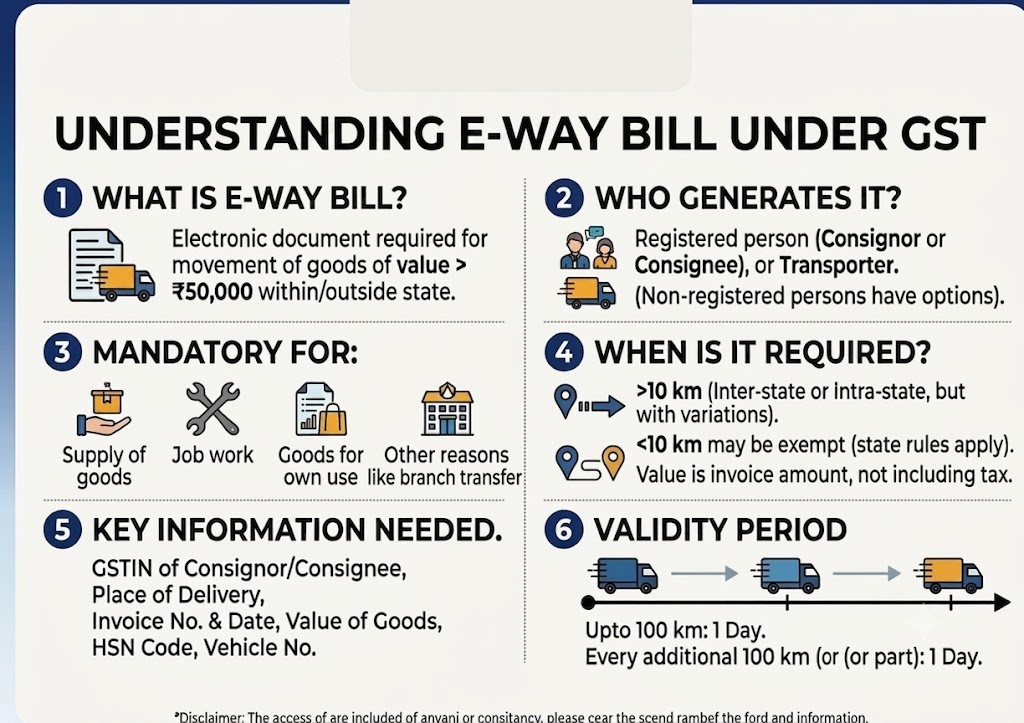
  • Form 16 for ITR Filing AY 2026-27: What It Covers : and What It Silently Misses

    Form 16 for ITR Filing AY 2026-27: What It Covers : and What It Silently Misses

    Form 16 for ITR Filing

    Every June, millions of salaried employees across India receive one document from their employer and immediately assume their tax homework is done. That document is Form 16. And that assumption? It is one of the most common and costliest tax filing mistakes of the year.

    Form 16 for ITR filling is important. But it is not the complete picture. For AY 2026-27, filing your Income Tax Return based only on Form 16 can leave out significant taxable income, trigger a mismatch with your Annual Information Statement (AIS), and even invite an income tax notice. This guide breaks down exactly what Form 16 covers, what it misses, and what you must do before hitting ‘Submit’ on the income tax portal.


    What Is Form 16 for ITR filling and Why Do Salaried Employees Receive It?

    Form 16 is a TDS certificate issued by your employer under Section 203 of the Income Tax Act, 1961. It certifies the amount of tax deducted at source (TDS) from your salary and deposited with the government on your behalf. As per the Income Tax Department, every employer who has deducted TDS from salary payments is required to issue Form 16 to employees by June 15 of the assessment year.

    The document has two parts:

    Part A : The TDS Summary

    Part A Covers:

    • Employer and employee PAN and TAN details
    • Quarter-wise TDS deducted and deposited

    Certificate number issued by TRACES (the government’s TDS reconciliation portal

    Part B : The Salary Breakdown

    Part B Covers:

    • Gross salary and allowances
    • Exempt allowances (HRA, LTA, etc.)
    • Deductions claimed under Chapter VIA (80C, 80D, 80G, etc.)
    • Net taxable salary and final tax computed

    Tax regime chosen (old or new)

    Also Read our Detailed guide on :Old vs New Tax Regime 2025: Stop Guessing, Start Calculating

    Together, Parts A and B give you a structured view of your salary income and the tax your employer calculated. But and this is critical Form 16 only reflects what your employer knows about your finances.

    What Form 16 for ITR filling Does NOT Cover: Income That Belongs in Your ITR

    This is where most salaried taxpayers go wrong when filing their ITR for AY 2026-27. Your employer can only deduct TDS on the salary they pay you. Any income earned outside of that employment relationship is completely invisible to them and therefore absent from Form 16.

    Here is income that will not appear in your Form 16 but must be disclosed in your ITR:

    • Interest income from savings accounts, fixed deposits, recurring deposits, and post office schemes often reported by banks to the Income Tax Department via Statement of Financial Transactions (SFT)
    • Capital gains from the sale of shares, equity mutual funds, debt funds, or property taxed at different rates under LTCG and STCG rules
    • Rental income from residential or commercial property let out during the year
    • Freelance, consulting, or professional income earned over and above your salary
    • Income from previous employers if you changed jobs during the financial year
    • Dividend income from shares and mutual funds now fully taxable in the hands of the investor
    • Winnings from online gaming, lottery, or other speculative sources

    Practical Example: Ramesh is a salaried IT professional in Pune earning ₹14 lakh annually. His employer deducts TDS and issues Form 16 reflecting zero additional tax liability. However, Ramesh also has ₹85,000 in FD interest and ₹1.2 lakh in STCG from selling equity mutual funds. None of this appears in his Form 16. If he files his ITR based only on Form 16 and ignores these, his AIS (Annual Information Statement) will show the mismatch and the Income Tax Department may send him a notice under Section 143(1)(a) for under-reporting of income.

    Form 16 vs AIS: Why a Mismatch Can Trigger an Income Tax Notice

    The Income Tax Department’s AIS and Form 26AS now capture a comprehensive view of your financial transactions far beyond what your employer reports. Banks report interest income. Brokers report capital gains. Mutual fund houses report redemptions. Registrars report property transactions.

    Before filing your ITR for AY 2026-27, always cross-verify your Form 16 with your AIS and Form 26AS available on the Income Tax e-filing portal. Any mismatch between what you declare and what the department already knows through third-party reporting can result in a defective return notice or tax demand.

    If you find a discrepancy, the correct approach is to file an accurate return reflecting your true total income not simply what Form 16 shows.

    How to File ITR Using Form 16 Correctly for AY 2026-27

    Here is a structured approach for salaried employees to use Form 16 as a starting point not an endpoint for ITR filing:

    Step 1: Download and Verify Form 16

    Ensure your Form 16 has a valid TRACES watermark and matches the TDS reflected in your Form 26AS. Part A details must be TRACES-generated; do not accept manually typed versions from employers.

    Step 2: Collect All Income Sources

    Gather interest certificates from all banks and NBFCs, capital gains statements from your broker or mutual fund house (from Consolidated Account Statement), and rent receipts if applicable.

    Step 3: Compute Total Income

    Add all sources to your salary income from Form 16. This gives you your actual gross total income, which may be significantly higher than what Form 16 reflects.

    Step 4: Choose the Right ITR Form

    If you only have salary and interest income, ITR-1 applies. If you have capital gains, you need ITR-2. Business or professional income alongside salary means ITR-3 or ITR-4. Read our detailed guide on ITR-1 vs ITR-2 vs ITR-4 for AY 2026-27.

    Step 5: File Before the Deadline

    The ITR filing deadline for AY 2026-27 for salaried individuals is July 31, 2026. Late filing attracts a penalty under Section 234F of up to ₹5,000, plus interest under Section 234A on any tax due.

    Key Takeaways

    • Form 16 is issued by your employer and covers only your salary income and TDS it is the starting point for your ITR, not the complete picture.
    • Income from FDs, capital gains, rent, freelancing, and dividends is NOT reflected in Form 16 but must be declared in your ITR.
    • A mismatch between Form 16 and your AIS/Form 26AS can trigger an income tax notice under Section 143(1)(a).
    • Always verify your Form 16 against your AIS before filing. The ITR deadline for AY 2026-27 is July 31, 2026.

    Choose the right ITR form based on your complete income not just your salary.

    As Dr. Haresh Adwani, PhD in Commerce and a practicing law graduate with decades of tax advisory experience, often emphasizes to his clients: “Form 16 tells you what your employer reported. Your ITR must tell the government the complete truth and those two numbers are rarely the same for most urban professionals.”

    Frequently Asked Questions

    1. Is Form 16 mandatory to file ITR for salaried employees?

    Form 16 is not legally mandatory to file ITR, but it is the most reliable document to report salary income accurately. You can file using salary slips and Form 26AS if your employer has not issued Form 16.

    2. Can I file ITR using only Form 16 without checking AIS?

    Filing without checking your AIS is risky. The Income Tax Department uses AIS data to auto-verify returns, and any mismatch can result in a defective return notice or demand for additional tax.

    3. What income is not included in Form 16 for ITR filing?

    FD interest, savings account interest, capital gains on shares and mutual funds, rental income, dividend income, and freelance earnings are not included in Form 16 and must be added separately while filing ITR.

    4. What happens if I file ITR based only on Form 16 and miss other income?

    The Income Tax Department may issue a notice under Section 143(1)(a) for under-reporting. You may also face additional tax demand with interest under Sections 234A, 234B, and 234C.

    5. Which ITR form should I use if I have capital gains along with salary income?

    If you have capital gains (LTCG or STCG) from shares or mutual funds along with salary, you must file ITR-2. ITR-1 does not allow disclosure of capital gains income.

    Conclusion:

    Form 16 is one of the most important tax documents an Indian salaried employee receives. But treating it as the only input for your Income Tax Return is a mistake that thousands of taxpayers repeat every year. From capital gains on mutual fund redemptions to bank FD interest quietly accumulating in your accounts your total taxable income is almost always larger than what your employer has captured.

    Filing an accurate, complete ITR protects you from notices, demands, and penalties and ensures you claim every refund you legitimately deserve. Take the time this season to check your AIS, gather all income sources, and file a return that truly reflects your financial year.

    About the Author:

    Mukesh Chavan is a dedicated indirect taxation and compliance professional associated with Adwani & Co LLP, specializing in GST advisory, GST audits, GST assessments, and RERA compliance services. With extensive experience in handling complex regulatory matters, he assists businesses in ensuring compliance with evolving GST laws and real estate regulations while minimizing risks and enhancing operational efficiency.

    Mukesh has successfully guided clients through GST registrations, return compliance, departmental assessments, audits, litigation support, and tax planning strategies. He also possesses significant expertise in RERA compliance, helping real estate developers, promoters, and stakeholders navigate regulatory requirements and maintain seamless project compliance.

    Through his articles and professional insights, Mukesh aims to simplify complex GST and RERA provisions, offering practical guidance that empowers businesses to remain compliant, avoid disputes, and make informed decisions in an increasingly dynamic regulatory environment. His approach combines technical expertise with practical business understanding, enabling clients to focus on growth while meeting their statutory obligations with confidence.

    Need Help with NRE/NRO Taxation?

    Whether you are an NRI, OCI holder, overseas employee, or a returning Indian, understanding the tax implications of NRE and NRO accounts is critical.

    At ITRAdvisor.in, we help NRIs and returning Indians with:

    ✔️ NRE and NRO taxation

    ✔️ Residential status determination

    ✔️ Returning NRI tax planning

    ✔️ DTAA advisory

    ✔️ Foreign asset reporting

    ✔️ NRI Income Tax Return filing

    ✔️ Tax notice handling

    ✔️ Capital gains and property taxation

    If you are unsure whether your NRE interest is taxable, whether you need to file an ITR in India, or how to handle NRO income, professional guidance can help avoid costly mistakes.

    Visit ITRAdvisor.in to schedule a consultation and get clarity on your NRI tax obligations.

    Disclaimer: ITRAdvisor.in is an educational and informational platform focused on tax awareness and compliance updates. Nothing contained herein should be construed as solicitation or advertisement of professional services. Professional services, where applicable, are rendered in accordance with ICAI guidelines. This article is published on ITRAdvisor.in, a tax and compliance knowledge platform. The content has been reviewed for technical accuracy by professionals associated with Adwani & Co LLP.

    A prominent “File Your ITR Now” button near the top and again at the end of the article.

    Need help filing your Income Tax Return? Click the WhatsApp icon and our team will guide you through the process and assist you with your ITR filing.

    Have questions about your ITR? Click the WhatsApp icon to connect with our tax experts for quick guidance and personalized assistance.